An Interview Process Where Everyone Says YES
You Know Who You Need. Here's How to Actually Find Them.
Long story short: The point of the interview process isn't to test someone — it's to create the conditions where both of you can figure out if this is the right fit. If you’re tired of making bad hires or are making your first hires and want to get this really right, check out our Interviewing Toolkit if you want a head start.
I was recently sharing with a group of folks from the Joyful Impact Accelerator on hiring lessons learned when the question of the interview process came up. How long should it be? How do you actually get to know folks? What about exercises — do they work? What doesn't?
I will not pretend to be an expert on this. At all.
What I will say is that I've been doing this for twenty years, across hundreds of hires, and I have made probably every mistake you could make related to the questions above:
I used to run VERY long interview processes — like, we are going to really, really know each other before this happens — until brilliant humans, candidates, and colleagues like Pauline Hill helped me understand how disrespectful of people's time and energy that was.
I refused to do work products/exercises for a while. Then I started doing them and not paying people. Then I paid people but gave them huge projects that took forever. Then I let people do them on their own time — until we got three bad hires on our tech team who had fabricated their portfolios, and I realized we needed some of this to be live.
I've also rushed hires because I was overwhelmed and I've ignored red flags because I was too locked into my plan.
I was recently reflecting with a colleague on the times we've both hired people we KNEW weren't quite right, and when we got honest, the same patterns kept surfacing: sometimes it's the superhero complex — I think I can just cover for it, skill them up, make it work. Sometimes I'm too committed to a path I've already mapped out, and I'm filling the plan instead of continuing to ask if this makes sense. And sometimes? It's just urgency. I need someone. I'm operating with this desperate need to get it done that — when I'm honest — likely isn't even real.
So, what I'm sharing in this article is what I've put together over the years to protect me from myself. To build a process I can stand behind — one that hopefully balances all the things. Getting to really know someone AND respecting their time. Being thorough AND being efficient. Trusting my gut AND having enough structure that my gut doesn't lead me astray.
It's not perfect. There's absolutely room to shift and evolve. AND overall? It has helped me make better and better hires every time I use it.
The point of this interview process isn't to test someone. It's to create the conditions where you AND the candidate can figure out if this is actually the right fit — with enough honesty, transparency, and curiosity on both sides that everyone can say yes with their whole chest, or walk away before anyone gets hurt.
The Key Takeaway
When I sat down to think about why I kept getting this wrong, I realized the problem wasn't any single interview or conversation — it was that I didn't have a process that encouraged honesty on both sides early enough. What I needed was a system where every step gave both of us real information — not performance, not testing, but genuine opportunities to figure out if this was actually the right fit before anyone was in too deep.
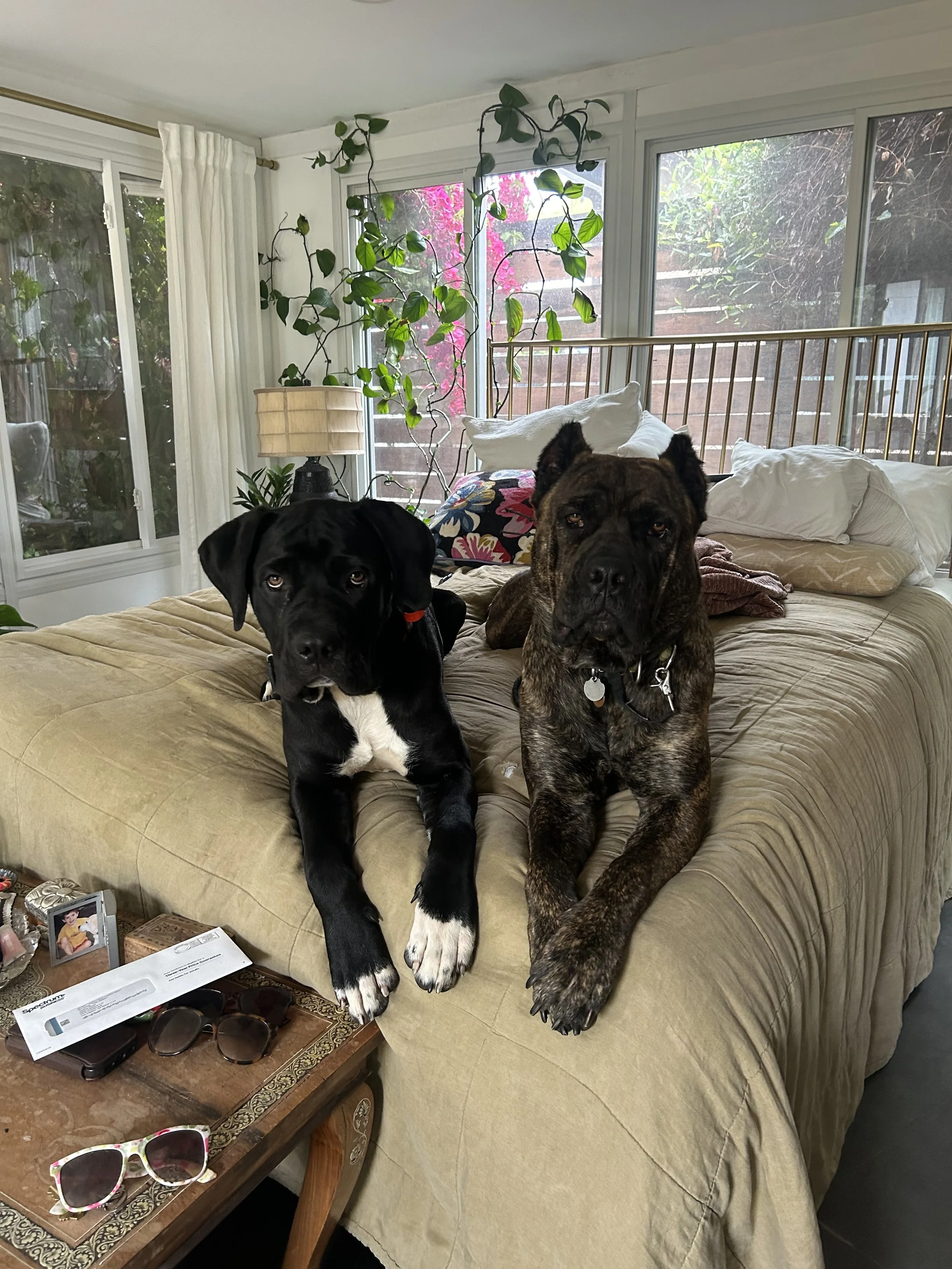
I know - a random dog photo!!! And we got REALLY clear on why for the second pup, needed to play wildly well our first (there’s nothing that can tire a dog out like another dog and we couldn't keep up) AND we wanted a dog that would snuggle and be a little more loving than our I want to be right next to you and will protect you in all things but please only touch me when I want to be touched. The specifics shifted (size, age, etc.) but the why our family needed a second pup were a YES the whole way through!
Jess’ Interview Process
If you're a "just give me the template, I'm ready to get started" kind of person (aka Helia's COO Libby), here's the Interview Process Template that walks you through the full flow:
Step 1: Pre-Screen Questionnaire — culture signals before you ever meet
Step 2: Phone Screen — quick alignment check
Step 3: Samples of Existing Work — ask for what they've already done
Step 4: The Why Interview — the big one (phone only, 45 minutes of listening)
Step 5: Panel Conversations — team fit, both directions
Step 6: Exercise/Activity/Work Product — see how they think (with nuance!)
Step 7: The Final Conversation — lay it all on the table
If you're a "tell me the story behind each step so I know why it matters" kind of person (aka Helia's Founder, Jess), read on for the good stuff!
Step 1: The Pre-Screen Questionnaire
Before I ever meet someone, I want to hear from them. Not in a cover letter way — in a "tell me something real" way.
When I'm doing big public job postings, I'll put together a pretty straightforward questionnaire:
Why are you excited about this?
What do you love to do?
Maybe I'll list out 10 work activities and ask people to pick their favorites — or rank them in order. Writing plans, executing plans, responding to changes in plans, managing people, building systems, that kind of thing.
It tells you so much about what someone actually wants to spend their time on versus what they think you want to hear.
But my absolute favorite question to ask in a pre-screen? Pet peeves.
I always ask what their pet peeve is. And the answers are unbelievable. Someone will write, "I hate when people are late to meetings." And I'm like — well, this is not gonna work for you, because I am chronically 3 minutes late to everything and our entire culture runs on "close enough." Or someone says, "I don't like when plans change." And it's like, okay, you would be miserable here. We change plans every five minutes.
The thing is — people KNOW themselves. They'll tell you exactly who they are if you give them the space. And that information upfront, before you've ever been in a room together and felt that pull of human connection that makes everything feel possible — that's worth its weight in gold.
Step 2: The Phone Screen
This is pretty standard — a quick call to check alignment.
Are they excited about the right things?
Does the basic stuff line up? Salary, timeline, the shape of the role?
I generally have someone on my team do the phone screen. It doesn't need to be the hiring manager — it just needs to be someone who can have a real conversation and come back with a clear sense of: Does this person seem genuinely interested in THIS job, or are they just looking for A job?
That distinction matters more than you'd think. And it saves everyone a lot of time.
Step 3: Samples of Work They've Already Done
If you're interested in getting samples of someone's work, this is a great moment to ask. Get a sense of what they've done that's commensurate with the role — sample project plans, writing, decks and presentations, reports, whatever feels relevant. You can be super specific about what you want to see OR really general and let folks decide what to share. Either way, you want something that gives you a sense of the work they do and how they do it — but don't make it too much.
This is pretty early in the process — and that's intentional. These work samples are meant to be stuff someone already has and it's pretty easy to share; not a totally new work product for them to create. It respects everyone's time and gives you something real to reference later.
That said, depending on the role, feel free to move this step later in the process. There's no hard rule here. The point is: before you ask anyone to create something new for you, see what they've already done first.
Step 4: The Why Interview
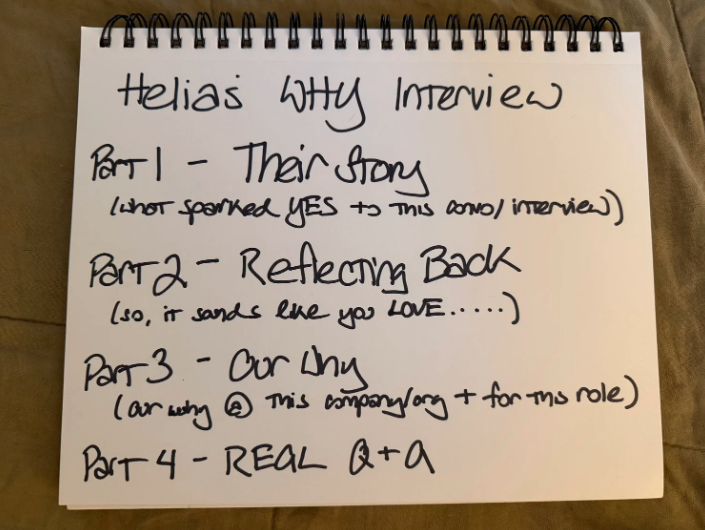
Okay. This is the big one. This is probably the MOST important interview you can do — and honestly, one of my favorites. We love it so much that it shows up in almost every article in our hiring series as a recommendation. It's that good.
First things first: I do these on the phone only. Never video. Because I think video sometimes creates too much about paying attention to facial expressions and performing engagement — and I don't want that. I just want someone to feel free to talk. And I don't want to be assessing them — I just want to be listening.
I literally just say: “I'd love for you to introduce yourself – you can either walk me through your resume OR tell me a few stories. What I really want to hear is what sparked you enough to say YES to this conversation about our organization and this role in particular.”
And then I shut up. I let them talk. Sometimes they talk for 45 minutes of our hour, and I just let them go. I walk back and forth in my yard, on the phone, and I listen to everything they say.
But I'm listening for very specific things:
What they lead with — the things someone chooses to tell you first are what they value. When they're telling you the story of what they did and what they're really proud of, you get a very clear picture of what matters to them.
Where their energy shifts — you can hear when someone gets excited. You're like, ooh, and then there was THIS, and then there was THIS. That's the real stuff. That's what they actually want to be doing. Listen to see if it lines up with the actual role you’re hiring for.
What they skip over — what they're not getting into, what they gloss past. Not avoiding, necessarily — but it's just not important to them. It's not where their fire is. And that tells you something, too.
Whether the why matches — when a candidate's motivation aligns with where your organization is and what you need in the role, most other gaps can be bridged. Misaligned motivation can't be fixed, no matter how strong the resume.
When I started doing the Why Interview, it led me to make some hires I never would have made if I was just assessing resumes and skills: a Target GM, a fashion project manager, a customer success hire who didn't like people. You can read the full story in this article, but the gist is that each of these hires ended up being very successful in their roles despite not being an obvious candidate at first. The reason? Their why matched our why.
Match the why — and everything else works out.
→ Thinking about building an interview process that screens for what actually matters — not just credentials? Sophia Zisook designs equitable hiring processes from job description through offer. → Email sophia@negotiatewithsophia.com with "Helia Connection" in the subject line.
Step 5: Two Panels (Or Something Like It)
If the Why Interview goes well, I generally do one or two conversations with the people they're going to work with. Some kind of panel where they get to share stories on both sides and walk through examples together.
This is less about "can they do the job" — you've already gotten a pretty good sense of that by now — and more about "do they want THIS job with THESE people?"
I think it's really important to get a feel for the humans you're going to work with day to day. The more you can create space for that, the better. Because we've all been in situations where the job looked great on paper but the actual humans you were working alongside made it feel like a different role entirely.
Use stories — on both sides. This is where stories become everything. I'll tell the team to share something about what it's really like here — a time we were operating at our best AND a time we were operating at our worst. Not to scare anyone, but because I want candidates to hear the real version and react to it. You can tell so much from someone's facial expressions and body language when you're sharing what your culture actually looks like. Are they leaning in? Are they like, ‘Ooh, tell me more?’ Or are they doing the polite smile while internally running for the exit?
And ask for stories back. Some of my favorites: What's been your favorite role or working relationship and why? Tell me about something you're most proud of doing — the whole story. Who's someone you've loved working with, and what made it great? These aren't trick questions. They're invitations for someone to tell you who they actually are — and what they actually want.
Here's what I'm listening for: I want someone who loves where we are and wants to help us get better — not someone who wants to come in and fix us. There's a real difference. I've found that anyone who doesn't think we're doing good work and wants to come in and change us is not someone I want to work with. Anyone who's like, I love what you're doing and I want to help make it better — that's someone I want to join. When you're telling those real stories, you can tell which one you're sitting with. You can feel it.
Both reactions are completely valid. The point is to find out NOW — not three months in.
Lucy Recio, a Joyful Impact Fellow, named something in one of our sessions that I keep coming back to — the beauty of "active consent" in hiring. The idea that you're giving candidates real, honest information so they can actually choose — not just hope it works out. That's what these panel conversations should be doing. And it goes both ways.
I'll also say — I once took a job as the right hand running most of a large organization, and I knew going in that the partnership wasn't going to feel right. I'd just had a beautiful experience working with someone I loved, and when I met this new person, I was like… this isn't going to feel good. But the job made sense for my family. The work was meaningful. I'm a great right hand. It'll be fine.
It was not fine. And the conversation that could have prevented it was so simple. If either of us had just asked, "What's been your favorite working relationship, and why?" — and then really listened — we would have known. What I loved about working with my previous boss, she would have heard and said, that's not how I work. What she needed from a partner, I would have heard and said, that's not me. We skipped that conversation, and we both paid for it.
Step 6: The Exercise or Activity
Okay, this one is where it gets nuanced. And honestly, where my thinking has evolved the most over the years.
Here's what I've landed on — for now:
Always ask for existing work samples first. This is Step 3, and it comes early. Don't start with a custom assignment if you can start with something they've already created.
Use live tasks when you need to verify technical skills. I learned this one the hard way. We had three bad hires on our tech team because people had either paid someone else to do the work or outsourced their portfolios. After the third time, my team lead was like, Jess, we have to do this live. And I was like, that feels so offensive! But she was right. So now, for roles where technical skill verification matters, I'll have someone do about 30 minutes of work on a call. It's not a gotcha — it's just, let me see how you actually approach this.
The "first 90 days" prompt. For more senior roles, I love asking: here's the job description — how would you approach your first 90 days? Keep it under an hour, put it in notes format, don't make it polished. I don't want a deliverable. I want to see how you think.
For more junior roles — like an EA or coordinator — it's similar energy but different questions. What would you want to know about the work? What are the first five pieces of information you'd need? What are the techniques you like for organizing someone's time? You're seeing how they think and how they'd share information — not asking them to produce something you're going to use.
What NOT to do: Don't hand someone your strategic plan and say, "Tell me the 12 great things and the 5 awful things." No one's set up for success with that, and what are you going to do with it anyway?
The equity piece — and this one matters. Different people think differently. I'm great live — I can have a conversation and figure it out on the fly. But I know other people who, if you said, "How are you going to approach your 90 days," would do way better with time to think about it than being put on the spot. So how do you honor both? Maybe it's sharing the questions ahead of time and letting people decide how they want to engage. Maybe it's offering options. I'm still working this out, if I'm honest — but I think being thoughtful about it matters.
As Lucy Recio put it in one of our sessions: this is also a matter of equity. The time, energy, and expertise that candidates offer in these tasks — especially unpaid — disproportionately impacts some people more than others. Keep it under two hours. Make it representative of the actual work but not something you're going to use. And pay people for their time.
A note on AI: This is evolving — and quickly. People can use AI on take-home assignments now, which is another reason I've shifted toward questions and thinking over polished deliverables. What questions would you ask to get the information you need? What would you want to know about this work? How would you approach figuring this out? The questions someone asks are often more revealing than a beautiful document they may or may not have written themselves.
Step 7: The Final "Capstone" Conversation
I usually have a last interview that I think of as just, like, we're laying it all on the table.
What have you learned through this process that you love?
What are you most excited about?
What worries you?
What worries me?
What questions are still lingering — for either of us?
It's not just a debrief on the interview process itself — it's about everything they've taken in. Every conversation, every interaction with the team, every piece of information they've gathered along the way. By now, they've been in this for a while. They have real impressions. I want to hear them — the good ones AND the hard ones.
For senior roles — the kind where you're going to spend a LOT of time together — I do this in person. We fly to each other. Because there's something about being in a room together, without screens, that allows you to feel the things that video can't capture.
I'll share what I'm excited about AND what I'm worried about. I'll ask them to do the same. And I'll tell them things I might not have said earlier — the hard parts of the culture, the places where I know we're still figuring it out, the reality of what their first six months might actually feel like.
This is also where those stories come back one more time.
What's been your favorite working relationship, and why?
What would make this one feel like that?
What would make it feel different?
I want someone who can sit in this conversation and be honest — not performing, not selling, just two people trying to figure out if this is the right thing for both sides.
And this is where I check my own patterns. Am I saying yes because I genuinely believe this is the right person? Or am I saying yes because I'm the superhero who thinks I can cover for what's missing? Am I filling a plan, or am I actually listening to what I've learned through this process?
If both of us can sit in that conversation and feel honest and excited? That's when I know.
Putting it all together
Here's the thing about this process — no single step does it all. But together, it's solid. Each step builds on the last, and each one gives you (and the candidate) a slightly different kind of information:
The questionnaire tells you about values and culture fit before anyone's in a room together charming each other.
The phone screen checks basic alignment.
The work samples show you how someone thinks without asking them to perform. The Why Interview tells you what actually drives them.
The panels show you whether the team connection is real — and whether they love where you are and want to help you get better.
The exercise tells you how they approach work.
And the final conversation is where you both get to be fully honest about what you've seen and what's still lingering.
Skip a step, and you've got a gap. Rush through, and you'll miss something. I know — because I've done both. Many times.
And look — your version of this might not be seven steps. Maybe it's five. Maybe the order shifts for your context. Think about what serves YOUR process — considering all the pieces and the underlying goal: How does everyone involved get to a place where they feel this is a HELL YES, based on real, honest information about what's actually coming?
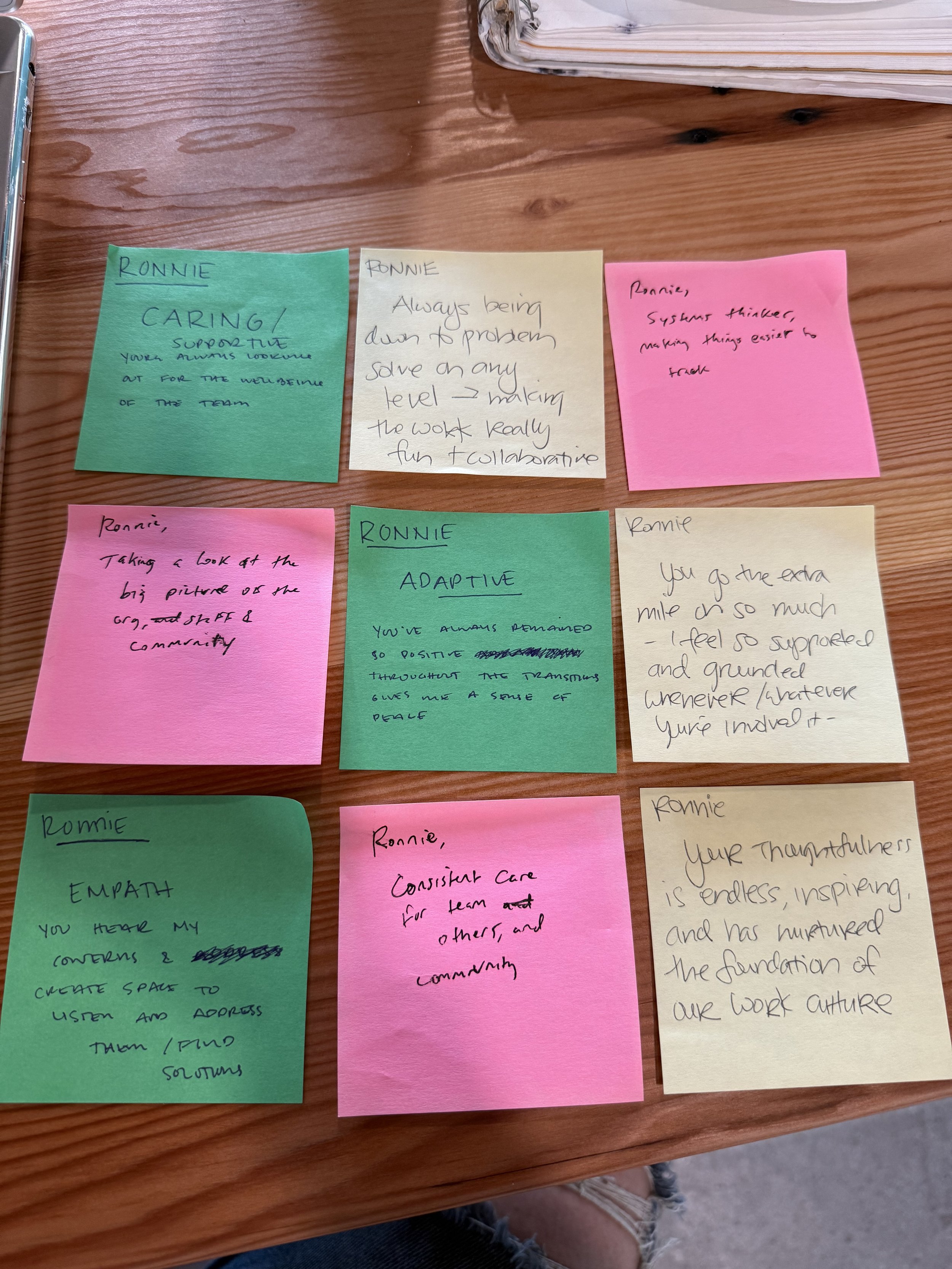
When you get this right, it creates the MOST beautiful teams. Even with vastly different styles (big dreamers that want do everything and thoughtful introspectives that move slowly), if their why matches the org AND their role (big dreamers = visionary leaders and thoughtful introspective = director of operations), they will usually LOVE working together as we can see for the accolades for this thoughtful introspective who’s big dreaming colleagues love and appreciate what he brings!!!!
When to Do This Yourself vs. Bring Someone In
Everything I've shared here? You can do it. If you're willing to slow down, be honest about your own patterns, and give both sides enough information to actually make a good decision — you'll avoid most of the expensive mistakes.
You might want outside help if:
You keep making the same hiring mistakes and need someone to help you see the pattern (raising my hand here too!)
You're building your first team and want to get the process right from the beginning
The role is senior and high-stakes, and you want a thought partner on the full process design
You've been searching for months and aren't finding the right candidates
Your interview process feels long and exhausting but you're still not confident in the hires you're making
If You Want Help
Sophia Zisook helps organizations build equitable hiring processes — from job description through offer. She's refreshingly direct about where most orgs go wrong and how to fix it.
She's a good fit if:
You want to redesign your hiring process to be more systematic AND more human
You're hiring for a role where getting it right really matters and you want to be thoughtful about equity
You keep defaulting to the same interview approach and it's not working
You need help designing exercises and assessments that are fair and actually useful
Ready to talk? → Email sophia@negotiatewithsophia.com with "Helia Connection" in the subject line.
Caroline Fitz-Roy at Fitzroy and Associates partners with social sector organizations on executive and leadership searches — from role design through final offer.
She's a good fit if:
You're hiring for a senior role and want a recruiting partner who gets the social sector
You've been searching for months and aren't finding the right candidates
You want someone to manage the full process so you can focus on running your organization
Ready to talk? → Email caroline@fitzroyandassociates.com with "Helia Connection" in the subject line.
Not sure Andrea's the right fit? Book 30 minutes with Helia and we'll help you figure out who in our Collective might be.
What to take with you
Start here (free)
If you're about to start hiring:
→ Interview Process Template — The full 7-step process in a template you can share with your team or adapt for your org
→ Pet Peeve + Favorites Questionnaire Template — Build a pre-screen that surfaces culture fit before you ever meet
→ The Why Interview Template — The conversation guide and reflection prompts for the most important interview you'll do
Trying to figure out the role you need?
→ Right Role at the Right Level Template — Make sure you're clear on what your org actually needs before you start the process
→ Common Roles Reference Guide — Salary ranges, responsibilities, and what each level will and won't do
→ Finding Your People Worksheet — Get clear on the culture you have before you interview anyone
→ Hiring with Heart and Strategy — Sophia's full process from job description to offer
Questions to sit with
Think about the last hire that didn't work out. Was it a process problem — you didn't have enough information — or a pattern problem, where you knew and hired anyway? What was driving it?
If you're hiring right now: at what point in your current process do candidates get real information about what it's actually like to work with you? Is it early enough for them to self-select?
What stories are you telling in interviews? Are they the real version — best AND worst — or the version you think candidates want to hear?
When was the last time you asked a candidate (or a potential boss!) about their favorite working relationship and why? What would that conversation reveal?
About Jess
Jess Skylar is the founder of The Helia Collective. She's spent twenty years scaling mission-driven organizations — growing Revolution Foods from $14M to $170M and co-building Think of Us into a national leader. Along the way, she's hired hundreds of folks. Some became her favorite humans to work with. Others taught her what not to do next time.
→ Want to work with Jess and our team? Book 30 minutes with Helia and we'll help you figure out who in our Collective can help move your work forward.
More where this came from
Jess Skylar is the founder and CEO of The Helia Collective. Her superpowers are fundraising, hiring, and hands-on-keyboard executive coaching.
If hiring isn't your stuck point, we might know someone who can help with:
Building budgets that actually get used
Managing change without losing your best people
Strategic planning that doesn't gather dust
See who's in the Collective or tell us what you're working on and we'll point you toward the right person.
This article comes from a Joyful Impact Accelerator session on hiring in February 2026 — plus twenty years of lessons learned (mostly the hard way). This wisdom forms the heart of the Helia Library — because we've learned the most from doing and from talking with other doers willing to share their wisdom. We don't need to start from blank pages or do everything alone.
As always, take what's helpful, leave what's not, and make it your own.
Article & Resource Tags