Long Story Short
Everyone leaves eventually. If you name succession early and make it a part of annual strategy conversations, it can be a beautiful tool to move the mission forward instead of making everyone panic about what comes next. If you want to start having this conversation long before you need it, we built you a Succession Planning Toolkit.
Why We’re Sharing This
Jess here.
Pat Donovan is one of my most favorite humans — a mentor, a former boss, one of those people I just count myself lucky to know. This conversation was a joy, because Pat does what he always does: he says it like it is. But with so much kindness and heart that whatever truth he hands you feels like exactly the thing you want and need to hear — and you know it’s coming from the best kind of place. His truth in this one? Everyone leaves.
I remember a colleague of mine talking about the difference between the for-profit and nonprofit worlds. In the for-profit world, where she did investment work, the whole model is: you start something, you build it, you move on to the next. That’s known, that’s learned. But in the nonprofit world, the investment we make is different — it’s this idea of I am personally going to drive this. I am the one taking this home. It is all on me.
And I think about all the places and times I’ve been in that trap — professionally, personally. All the things where it’s like, I am the center of this. I built it, so it works because of me. I put myself in the middle of decision rooms. I’m the grounding relationship everyone has, the connector who sees all the pieces.
And I’ve learned how detrimental that is — because at the end of the day, we all leave everything. Whether it’s soon, whether it’s later. If you make yourself the center of everything and pretend like you’ll always be there, your eventual decision to move on can send everyone into a panic.
When I started at Think of Us, I told my co-leader, Sixto, that I have this tendency to center myself — and not necessarily out of ego, more out of efficiency. I can get this done, I can move this forward, and I don’t want to put things on other people. I really didn’t want to do that there. And still, I’d catch myself, over and over: I’ll just take it. I’ll just take it. I’ll just do it. I have this relationship, I have these things. Oh. I’m doing exactly the thing I said I wasn’t going to do.
Then, maybe a year before I left — about three or four years in — I told Sixto I didn’t want to do this forever. And he said, with so much generosity, you can figure out whatever you want to do here. It was a beautiful thing to say, and I really appreciated it. AND it also meant we weren’t having the other conversation — the one about what my leaving could actually look like. So when I did decide to go, a year or so later, it wasn’t something we’d been planning or building toward together. I tried to do it thoughtfully, but it was so much more abrupt than if we’d been able to ask, early on, Okay — what could it look like for me to move on?
When we center the work instead of ourselves, succession planning just becomes part of how we operate. We pay attention to all the roles, not only the top one, and to how we help each person move toward their next thing — so the work itself keeps going and growing and stays as beautiful as we all want it to be. Naming that isn’t selfish. It isn’t a threat to walk out, and it isn’t a sign you’re not committed. It’s the opposite. It’s putting the work first.
Pat’s Story
This is Pat’s story — co-written with Helia and told from his perspective!
Succession was always in my DNA
Succession has always mattered to me, and I think that got instilled from the more traditional private sector, which is actually a place that does this pretty well. In the corporate world you’re always thinking about it, whether it’s the top position or down through the leadership ranks, because the whole motive is continuity: no disruption to the money flow. The intent is different than in our world, but a lot of what they do really works. Jack Welch, who ran GE back in the ’90s and early 2000s, wrote some great books on it. A mentor of mine, Rick Smith, talked about it constantly. So it was never something I shied away from. It was just a normal thing to talk about — part of your annual cycle, part of your long-term planning. What’s the talent plan for your key leaders, top and below?
“This is my last stop”
My own path here was anything but a straight line. I’m the youngest of five boys from Connecticut. I met my wife Marcy at the University of Colorado (34 years now), and we’ve got three adult kids who all live close by. Career-wise I’ve jumped around a lot — corporate HR at Vail Resorts, then real estate development, a year traveling the world with my family, then Revolution Foods, where Jess and I met. And from 2019 until this past December, I led an education advocacy nonprofit in Denver. Education has actually been the throughline my whole life. I’ve served on school boards and nonprofit boards for over 25 years, and I’ve spent far more time volunteering in education than being paid for it.
I knew walking in that this role was always going to be my final career stop, and I said so from the very beginning. In early conversations with my board I told them: I’m not planning to do anything after this. There’s something freeing about saying that out loud, and it’s just clearer for everyone. I didn’t set a timeframe. I just knew it was the last step.

Putting every succession pathway on the table
Once you tell people that you’ll eventually leave, the thing that actually makes succession relatively painless is normalizing the conversation, which is the part I don’t see happen much, especially in nonprofits. It means having really open conversations with your senior team and your board about the fact that you’re going to leave at some point, and what the different succession pathways could be.
- You can develop someone internally.
- You can hire someone from the outside.
- You can consider a merger, which is ultimately what we did.
If you put all of them on the table early and discuss them every year during planning like any other strategic priority, nobody panics when the time comes.
None of this was a big, public, GE-style naming of heirs. It was quiet — mostly executive sessions with the board, sometimes with a few senior leaders in the room, just so there was a plan for what it could look like. And it changed the dynamic. If you’re on a nonprofit board, you’re often quietly wondering what’s going to happen with your CEO. Running a CEO search is a ton of work; continuity or the lack of it threatens funding. Being open about where I was and what I was thinking made the whole thing an interactive planning process instead of a guessing game.
In my case, we did look hard at an internal-promotion scenario. We did real professional development with internal people and it didn’t end up panning out here. Those folks have since gone on to senior level leadership roles at other organizations, which is wonderful, but deciding not to go that route was intentional: honest conversations about what it would take to step into the bigger role, and honest feedback about readiness. And at the same time, we were intentionally evaluating what merger opportunities might be out there.
Picking a pathway
The biggest thing is that this is a multi-year process. You can’t do a well-thought-out transition in three to six months. I couldn’t have done what I did in that timeframe. Unless you’re lucky enough to have someone on your team who’s truly ready to step into your shoes tomorrow, you need runway.
When people ask how I evaluated the options, I tell them there wasn’t a formal rubric. But organization continuity was my north star, and with that frame there were a few things I got clear really clear on:
- Financial continuity — ensuring a leadership change doesn’t scare off funders
- Programmatic continuity — no disruptions due to knowledge gaps
- Leadership continuity — both for the top role and for the rest of the organization
Once you name those, you can hold every scenario up against the same set of criteria. Internal candidate readiness gets measured against it. A merger gets measured against it. Same criteria, different pathways.
As we got closer, a merger emerged as the better pathway, even with the huge amount of due diligence it entailed. I’ve now done two nonprofit mergers, and people really underestimate how much work it is to do well. There are a lot of examples of mergers that don’t go well. Ours went well — not perfect, but well — because of diligent project planning. We brought in an external partner, Dan Katzir, a former charter-network CEO, to help with the project management, the decision points, and the places where two organizations align (or don’t) culturally.
The merger was about strategy, not my exit
The thing I most want people to hear is this: the merger was driven by strategy, not by my exit. We had a theory — that bringing together a really strong programmatic organization and a really strong political one, and winning a set of elections, would let us accelerate the policy and programmatic work needed to improve outcomes for kids. I still believe in that theory. It was community-based and well-informed. The electorate just didn’t agree with us, and that one stung.
But the purpose of the merger was always the strategy and the outcomes we were chasing — not a convenient way for me to leave.
My advice to anyone: yes, there may be a leadership-transition piece, and you need to be thinking about it. But it has to be the right strategic decision. It should never be done strictly because it’s a tidy exit ramp for one particular leader.
That said, if you know you’re leaving, a merger can open a door. Often the biggest barrier to a good merger is the tension between two top leaders and who gets to stay. If one of them is already planning to depart, that tension just isn’t there. In our case, if I hadn’t been voluntarily leaving, we’d have had to sort out a leadership transition anyway, because you can’t have two CEOs.
The internal-successor question
I’ll be honest about the internal-successor question too, because it’s loaded in our sector. There’s real pressure to promote from within — from a board that’s gotten to know the senior team, and from the pull of the path of least resistance. Sometimes promoting from inside is exactly right, but you have to bring objectivity to it and ask, honestly: Is this person truly ready to lead the organization forward? Or is this just the comfortable choice?
Is this person truly ready to lead the organization forward, or is this just the comfortable choice?
During our multi-year process, the internal folks who were identified got a real evaluation and honest feedback on where they were strong and where they were still growing. The board saw them present, and gave them chances to engage independently of me, which matters because people need room to show up as leaders when you’re not in the room.
Make it a conversation — every year
The way to keep the conversation strategic (and avoid the panic that often comes with surprise succession decisions) is to make the whole thing less about the transition and more a moment to assess strategy. Every year ask yourself:
- How are we doing our best work?
- Is the structure we’re in still the right one?
- Am I still the right leader to move this forward, and if I weren’t here, what would that look like?
Those questions open the door for a board to say the harder things too — We love you, and maybe we need a different kind of leader for what’s next. And then you move toward that thoughtfully, over a year or two, with respect for everyone. The more you have these conversations, the better the organization gets and the better the eventual transition goes.
The catch is that this takes a strong board and a strong leader. If you’re weak in either, it’s hard. I did a lot of board development early in my tenure to get there. A board member’s job is the best interest of the organization, which sometimes means setting aside your personal feelings about the leader and the org you care so much about. When a board can get to that place, the conversations get deeper and, honestly, more rewarding — less transactional report-out, more real substance about how the mission is actually moving.
And I’ll name the structural gap: we don’t have an incentive system for this in the nonprofit world. Nobody’s bragging about a nonprofit exit on LinkedIn. The reward to transition, or to merge, is rarely there. In both of my mergers I heard “more people should be doing this” — from funders and partners — but I’ve never seen a real effort to fund a graceful glide path for a leader to exit instead of digging in. That’s a gap worth naming AND filling.
What I’d leave you with
One thing that surprised me: when you make a big decision, people ascribe their own motivations to it. Some saw this merger as a power grab — two strong organizations combining into something even more powerful. If you’re coming from a scarcity mindset, that’s how it can read. I probably could have done more to think through those perceptions ahead of time.
But if there’s one last thing I’d say, it’s that the process isn’t something to be scared of, unless you’re scared of hard work. Running your organization and running a merger at the same time is basically two jobs, and it’s intense. But it was one of the most constructive, rewarding experiences of my career — with my board, and with Clarence, the leader who stepped in. Even without the electoral outcome we wanted, I’d do it again.

What Made This Work
A few things I keep noticing about how Pat approached this — less a formula, more a posture:
- He said it openly and early. Walking in and telling his board “this is my last stop” took the charge out of the topic. It wasn’t leverage or a resignation, just clarity. (I love that he called it freeing.)
- He made it a yearly question, not a one-time event. “We’re going to talk about leadership succession and how it ties to our strategy every year.” When it’s part of the annual rhythm, nobody panics when it comes up.
- He put every pathway on the table — and judged them the same way. Develop someone inside, merge, or hire outside, all measured against the same continuity criteria (financial, programmatic, leadership — top and the rest). Same criteria, different pathways.
- He let strategy drive the org’s next step, not his exit. The merger had to be right for the mission first. His leaving just removed the barrier that usually kills these — the fight over who stays.
- He sequenced the news in concentric circles. The few people truly need-to-know people first, then key funders and partners as VIPs, then the wider world. A big tent too early, he says, just makes it complicated.
- He was honest that this takes a strong board AND a strong leader. Not every board can hold this conversation yet — I’ve sat on ones that couldn’t — and that’s okay. You can start smaller: name it once this year, build the board’s muscle over time, and let the conversation grow from there.
If You Want Help
Pat’s now retired and back to his roots in education advocacy — and he’s genuinely happy to talk with folks thinking through their own succession or transition. If you just want a chat, you can reach him at [email protected] .
Exploring a merger, partnership, or structural change? Kate Harris, a Helia Collective member, does exactly this work — walking organizations through mergers, partnerships, and transitions, and holding both the human side and the technical side.
She’s a good fit if:
- You’re weighing a merger, partnership, or transition and want someone who’s guided it before
- You want to pressure-test whether your structure still serves your mission
- You’re setting up a collaboration and want to get it right from the start
- You need someone who can hold the emotional complexity AND the project management
Connect with Kate!
Try it Yourself
Start here (free):
- Succession Planning Toolkit — The Retirement Note, Putting Succession on the Table, and Sequencing the Announcement.
- Dan Katzir — the external partner Pat used for merger project management and integration.
Recommended reads:
- Jack Welch’s books on leadership and succession — dated and very private-sector, but foundational to how Pat thinks about continuity.
- Apple’s 2025 CEO succession — a recent, well-run example worth studying for the multi-year thoughtfulness behind it.
Questions to Sit With
- You will leave someday, one way or another. What’s one thing you’d want to have started putting in place now?
- What would it look like to add a single, honest succession-and-strategy conversation to your board’s calendar this year?
- Beyond your own role — where does your organization lean a little too hard on one person? What would ease that?
- If a merger or transition were genuinely on the table, could your board hold that conversation? If not, what would help it get there?
- What would change if you treated your eventual leaving as an act of care for the work, rather than something to avoid?
Not sure Kate‘s the right fit? Talk to Helia directly!
This article comes from a coffee chat with Pat Donovan in June 2026. These conversations form the heart of the Helia Library — because we’ve learned the most from doing and from talking with other doers willing to share their wisdom. We don’t need to start from blank pages or do everything alone.
As always, take what’s helpful, leave what’s not, and make it your own.
About Pat
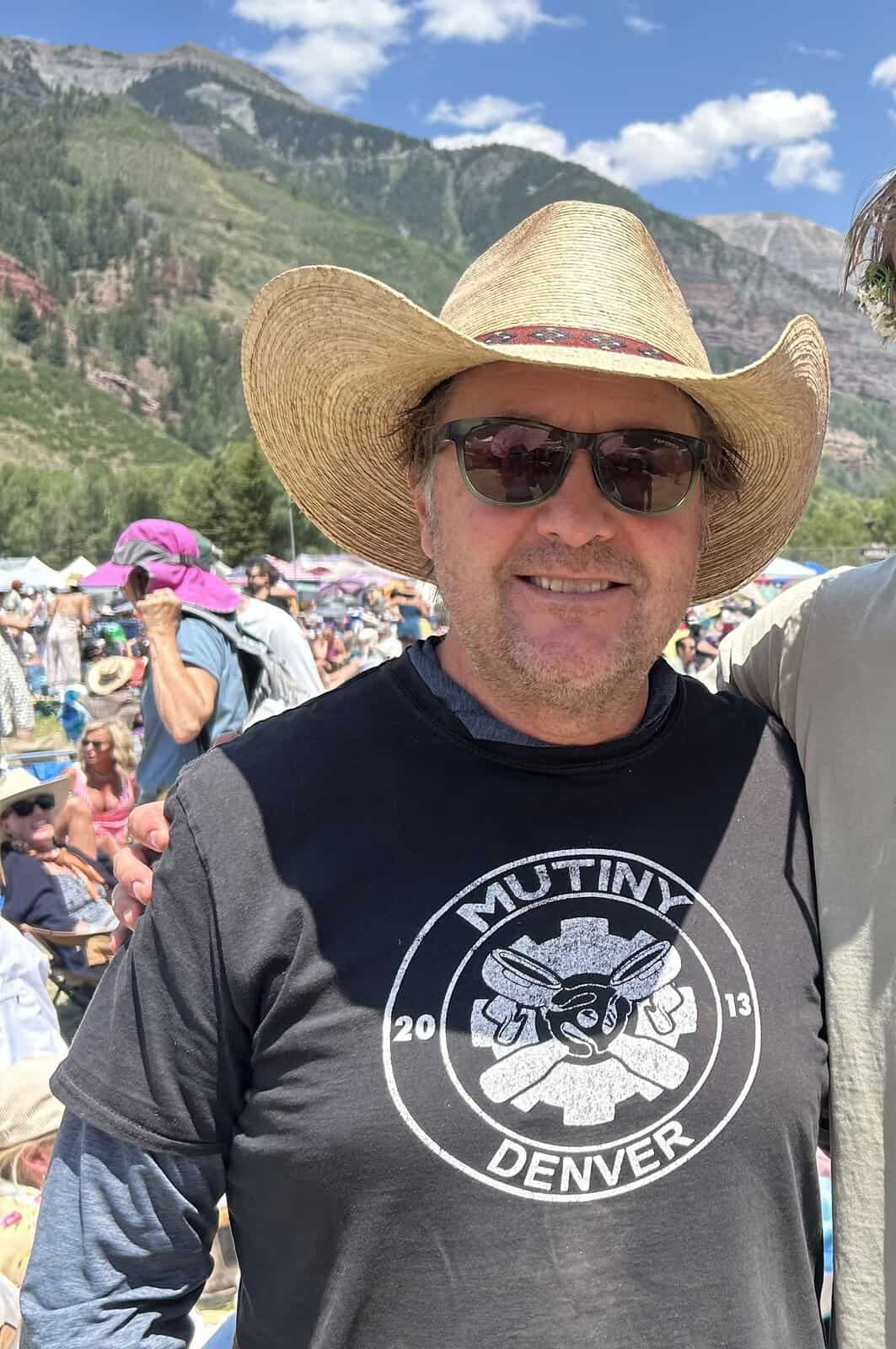
Pat Donovan spent 35 years across seven industries and five career changes — from running corporate HR at Vail Resorts, to real estate development, to a wild and formative run at Revolution Foods (where he and Jess met), to leading an education advocacy nonprofit in Denver from 2019 to 2025. But education has been the throughline all along: he got the bug when his oldest was in kindergarten, served on his local school board, and helped start a charter network that now serves thousands of students. He’s married to Marcy (34 years and counting), with three adult kids close by. These days he’s retired — which for Pat means skiing, playing guitar, watching soccer, catching live music, and adventuring a whole lot more.
Work with Pat