Long Story Short
This isn’t a story about failure. It’s a story about what it looks like to lead with values, even when it means letting go. When The Full Frame Initiative (FFI) made the decision to wind down, they didn’t scramble to survive — they asked what would serve their mission most powerfully. And then they acted on it. In this piece, you’ll hear from FFI’s founder, Katya Smyth, about what it really means to “end well,” why success isn’t always about longevity, and how the work can (and should) live on beyond any one organization.
How to Jump!
Why We’re Sharing This Story
Jess here. I was introduced to Katya Fells Smyth through a mutual colleague who’s part of FFI’s wind-down process, and I was immediately struck by her courage to challenge our sector’s assumptions about success. Her willingness to share this journey openly — with all its complexity and wisdom — reflects the same clarity and integrity she’s brought to decades of systems change work.
So, what happened?
After decades of successful systems change work, the Full Frame Initiative (FFI) is winding down. What I keep sitting with is that this wasn’t a failure — it was a conscious choice that it was time for the work to look different. When funding became challenging, FFI could have fought to survive at all costs (as we’re all taught to do!). Instead, they asked a more beautiful question: How might their mission continue most sustainably, even if that meant closing the organization itself?
I’ve been spending a lot of time thinking about how we can start creating the world we want, versus existing as we are or waiting for others to fix it for us. How we can start shifting and recentering who gets the attention and the focus.
Katya’s story of how FFI chose to wind down feels like a perfect example of this — reimagining what’s possible even with shutting down. What if closing an organization — thoughtfully, intentionally, and with real generosity — can sometimes be the most successful thing we might ever do? What if it’s the ultimate expression of putting mission over ego, community over institution, impact over accolades?
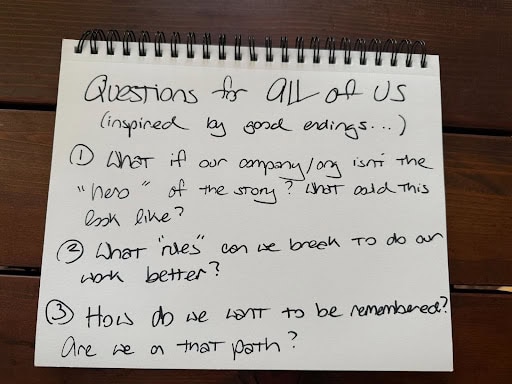
Katya’s Story
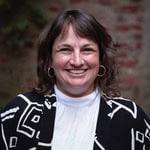
This is Katya’s story — co-written with Helia and told from her perspective!
I want to be clear: there wasn’t a dramatic “thing” that happened. No scandal. No sudden crisis. That’s important context for what I’m sharing.
The Full Frame Initiative was founded in 2009, though I’d been running it as a project for years before that. We’ve been remarkably successful at what truly matters—durably changing how governments and communities interact, and how people perceive and behave toward each other, to advance the idea that everyone deserves a fair shot at wellbeing.
My background is in evolutionary biology, which shapes how I think about change. I’ve always been suspicious of how we fetishize individual leaders or organizations, because I know how much context and serendipity and cumulative forces matter in making progress. Relationships matter. Real change happens through movements, not heroes or heroic organizations.
Over the years, we developed a deep theory on creating durable systems change, drawn from real success on the ground. We were largely foundation-funded, with some individual major donors and earned income balancing out the picture. When COVID hit, we were in the final stages of a major growth campaign. We, and our partners, were logging big wins.
At the same time, something was shifting in the funding landscape. Everyone talked about systems change, but they were trying to programmatize it rather than addressing how systems themselves were broken.
By 2023, fundraising was increasingly difficult, particularly getting in front of prospective new foundation funders.
I’d been planning to take a sabbatical when COVID hit; I finally did in 2023, and when I returned, we learned a major funder was changing direction. We moved into 2024, which proved to be the worst fundraising year in terms of new donor acquisition I’d experienced in my nearly 30 years running nonprofits.
Post-sabbatical, I brought the executive team into more financial management as part of a commitment to increasing shared leadership. We weren’t out of money. We hadn’t laid anyone off, but it was increasingly tight in a way it hadn’t been for a decade. In retrospect, I should have better normalized the reality that nonprofits face tough times — especially for team members who had only experienced leadership at FFI and other organizations during periods of financial stability. That closure is a reality that needs to be okay to name, and to be able to do so without it becoming a self-fulfilling prophecy. All of our planning was about moving forward, and that was what I was committed to, but I suspect that even naming it as a possibility in the summer made it seem like something being actively considered by other members of the Executive Team. That may have been scary.
When a key team member announced their departure in October, I spent the next 72 hours in conversations with our board and executive team. It became clear that rebuilding the executive team while simultaneously shifting our fundraising strategy would prioritize organizational perpetuity, potentially at the expense of the mission.
I kept thinking about organizations that shuttered suddenly, like Benefits Data Trust, which closed with just three weeks’ notice. All the attention went to lawsuits and employees—and almost none to the communities who depended on their work.
I kept coming back to the idea that how you leave matters. Leaving is what folks remember. We’d made promises to communities in Cleveland, in North Flint, in places where we worked. If we tried to keep going and the money really did run out, we too would shut down suddenly. After just trying to keep the organization alive, we would hurt communities that had already experienced too much trauma.
That wasn’t the organization I wanted to run. We’ve always been values-led and made hard decisions based on those values. Why throw them out now?
Over the course of about a week, we decided on an intentional wind-down with three clear goals: take care of our team, take care of our partners, and ensure our mission lives on.
In mid-October, we started talking to staff before we even had a complete plan, which goes against all conventional advice. We went back to our core donors and made a case for funding the wind down — for releasing restrictions on existing funding and for adding more dollars to the pot so we could do this well. Beyond that, we stopped fundraising immediately. We started working with our allies and partners to figure out what it would mean for the work to live on. By December, we had clarity: we could continue our work well through May, with a path forward for everyone.
That we had funders we could go to who were so responsive is really unusual. I know. And it made me realize that part of our ending well has to be making the road so others could follow. Because without funding, ending well is much, much harder.
Something unexpected and really magical was happening.
We started to feel an amazing energy shift. People reached out saying, “You can’t unsee this work,” and “What do I need to do to keep this going?” We invited those who had meaningfully supported our work to create a community of champions to keep the work moving forward, across the country. Today, there are over 100. Nineteen of these champions were invited to be stewards who agreed to shepherd the work for 18 months after we closed.
We kicked off the “Champions Community” with events with powerful art and music, sharing in the community all the ways policy and culture are shifting to center wellbeing equity, and opportunities for people to connect. We’re ending well with our partners, and it’s been genuinely energizing to tap into people’s desire to be part of something that continues beyond any single organization. I invited about a dozen staff to work with me to end well between October and May, and every single one of them has done so, completely locked in on supporting each other and the mission, and doing some of the best work we’ve done. I’m incredibly proud of them.
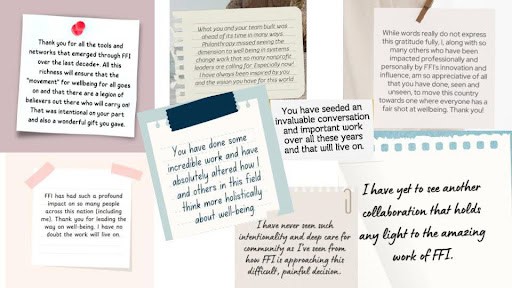
Questions to Sit With
- In your scenario planning, how honestly do you consider whether your organization should exist in its current form?
- Where are you prioritizing organizational survival over mission impact? Is that short-term?
- How might your organization be unintentionally holding (or hoarding!) power, resources, or knowledge?
- What would your community say is your most valuable contribution? Is that aligned with where you’re investing your energy?
- What conversations about organizational endings or transitions have you been avoiding? Who would benefit from having them now?
Try this Yourself
Start Here! (Free)
- The Good Endings Cheat Sheet: For all aspects of closure, Katya shares what the Ideal and Good versions of each look like, as well as key pitfalls to avoid. Start here, it’s really good!
- The Wind Down’s Resources are incredible tools and services self-described to help “ending with dignity is a process of acceptance, compassion, and care for our communities and ourselves.” (A must read: Leading at the End: Supporting Your Team in an Organizational Wind Down )
- Here is Katya’s BEAUTIFUL email shared with their community about 10 days before their official close along with the official FFI’s Closure Announcement
Recommended Reads:
- Katya found – and we loved – this Considering Closure article by Kate Harris and Kate Piatt-Eckert
- The Full Frame Initiative’s legacy website including information about champions and stewards.
- For the more “academic” of us, The Concept of Net Harm vs. Gross Benefit to help understand both sides of the impact equation
- Being in relationship with your own feelings leading others through transition is foundations – to give endings the care and attention they needs, read Good Bye: Leading change better by attending to endings
If You Want Help
Katya Fels Smyth has spent 30 years doing systems change work — and is now turning that same lens on something our sector rarely talks about honestly: endings. She’s actively building a field around how organizations close, how power and endings intersect, and what it looks like to put mission over institutional survival.
She’s a good fit if:
- You’re leading an organization through a wind-down or major transition and want a thought partner who’s been there
- You’re a funder or board member trying to understand how to support endings well — not just beginnings
- You want to challenge your own assumptions about what success in the social sector actually looks like
- You’re ready to ask “why the fuck not?” about the conventional wisdom around organizational survival
Connect with Katya!
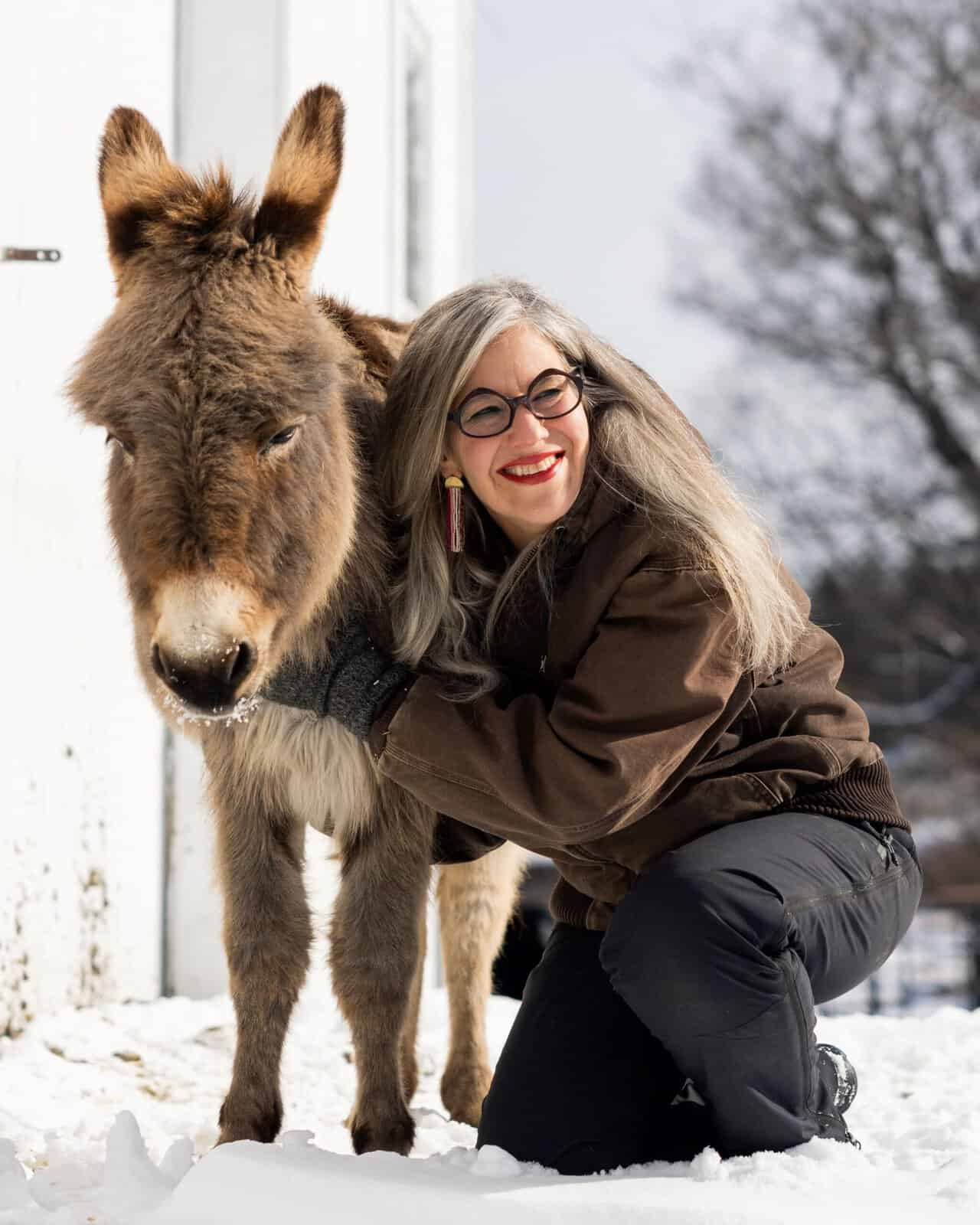
About Katya
Katya Fels Smyth founded the Full Frame Initiative after previously founding On The Rise, bringing her background in evolutionary biology to how she approaches change at the systems level. She has been an Echoing Green Fellow, Research Affiliate at MIT, and Research Fellow at Harvard’s Kennedy School of Government. She’s also an artisanal garlic farmer who is the human to rescued farm animals.
Work with Katya
This article comes from a coffee chat with Katya Smyth in April 2025. These conversations form the heart of the Helia Library – because I’ve learned the most from doing and from talking with other doers willing to share their wisdom. We don’t need to start from blank pages or do everything alone.