Long Story Short
Most of us treat leadership transitions (aka stepping away from the CEO/ED role) like something to survive rather than something to design. Claudia Caballero spent nine and a half years growing Centro Hispano from $60,000 to $3 million — and then chose to leave. Rather than planning her transition in secret, she did it openly, gently, and in collaboration with her team and board. If you’re considering a transition, we built you a Stepping Aside Toolkit based on Claudia’s wisdom.
Why We’re Sharing This
Jess here. I’ve been sitting with endings a lot lately, and what I keep bumping into is how much weight we give the word itself.
Ending.
It lands differently than beginning, doesn’t it? It has heft and finality and a faint whiff of failure built right in. Even when the ending is chosen. Even when it’s right for everyone.
I wrote about this on my Substack recently — how endings are just things that happen. Sometimes we choose them. Sometimes others choose them. Sometimes they just arrive. And yet we’ve built this whole architecture of meaning around them. Endings mean quitting, endings mean you couldn’t hack it, endings mean the thing you built wasn’t enough.
I say this as someone who has spent most of my life fighting endings until the last possible moment, and then leaving relatively abruptly once I finally accept what has been true for awhile. I’m not great at endings. I make them more dramatic than they need to be. I treat them like a verdict. A guilty verdict.
What I’m slowly learning — and honestly, what Claudia just handed me a much better version of — is that an ending isn’t a verdict. It’s one chapter in an entire book. And the question isn’t, Is this the moment for an ending? It’s, How intentionally do I want to meet this moment?
I first connected with Claudia through shared networks in leadership development programs — the kind that help social sector leaders ground in joy and purpose so they can bring that back into their work. But it wasn’t our connection that made me reach out when she told me she was leaving her CEO role. It was her language. There was no exhaustion in it, no desperation, no “I just can’t anymore.” There was genuine excitement about what was coming next AND a deep commitment to leaving well — for herself, for her team, for the organization she’d poured a decade into.
She called it a gentle transition. And I want to sit with that phrase for a second. Gentle Transition. I think the words are doing something really important: naming an alternative. Not secret. Not abrupt. Not ripped off like a band-aid. Gentle. Intentional. Infused with the same care she brought to building the thing she’s leaving.
That’s what this story is about.
‘Ending‘ has a heft and finality and a faint whiff of failure built right in.
Claudia’s Story
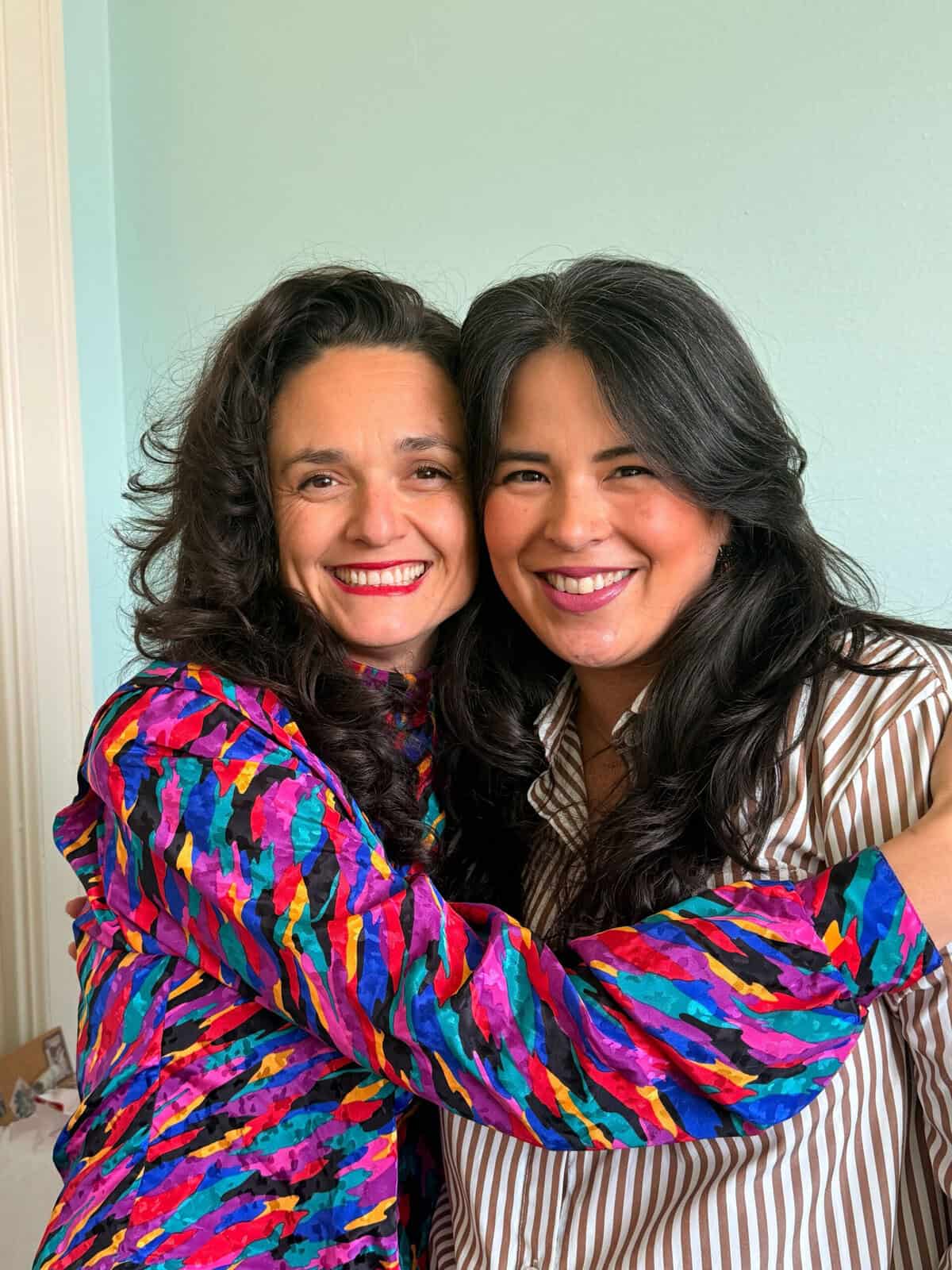
This is Claudia’s story — co-written with Helia and told from her perspective!
I’ve always been a leader. I’ve always been bossy — and I’m proud of it. I can get people excited about things and together we get things done. I’ve also always believed the best cure for imposter syndrome is faking it till you make it.
My path here has been anything but straight. I was born in Honduras — a Peace Corps baby, oldest of five, grew up in my family’s restaurant before international medical brigade work brought me to the States. When I eventually burned out on nonprofits (unhealthy founder dynamics, very savior-approach to the work — I didn’t have the vocabulary then but I knew it wasn’t right), I packed my car and moved to Austin without really knowing how to drive on highways. Started from scratch at an ice cream company. Built their wholesale department from nothing.
Then in 2016, my partner and I moved to Knoxville. I was hoping for a year to rest. That wasn’t in the stars. He found a job posting for the director of a nonprofit serving the Latino community. I would have never applied if I’d seen the title — I’d never been a director, never been a CEO, never run an organization. But he said “you could totally do this,” and I believed him.
There I was with a key to the door, a laptop, and a phone. No onboarding. A $60,000 budget that hadn’t been raised yet. Volunteers and board members trying to keep things afloat. I performed a coup d’état — thanked most of the board for their service and started over.
Nine and a half years later, we’ve got a $3 million budget. Went from one and a half employees to about 45 at the height. I cried every single day for the first three or four months from exhaustion and frustration, but something in my trauma DNA doesn’t make me a quitter.
We grew an immigrant-serving organization in a very conservative, very red state. We made sure the narrative of the Latino community couldn’t be separated from the rest of the community. We found creative ways to partner that no one else had really thought about in the region — translation services, Latino employee recruitment, focus groups — and we created a lot of flexible funds.
Then came January 3rd of 2025. I was staring at the wall in my new office, in a new building and I received the message: You have other lives to live. It was like a roadside billboard on the inside of my forehead and I couldn’t look away.
I knew exactly what it meant. It was telling me it was time to move on.
And then I had a panic attack. A real one. I felt terror. My next thought was: There’s nothing else I know how to do.
But, after a few deep breaths, I said to myself: It’s not the organization’s responsibility to keep you comfortable while you figure out what’s next.
I held these feelings for a few months, then shared with my executive team. They were not surprised. They were thrilled. It was, “Oh my gosh, I am so happy for you” instead of, “Please don’t do this to us.” And I realized: this transition was a project we could do together. A successful handoff wasn’t mine to carry alone.
The Existential Google Doc
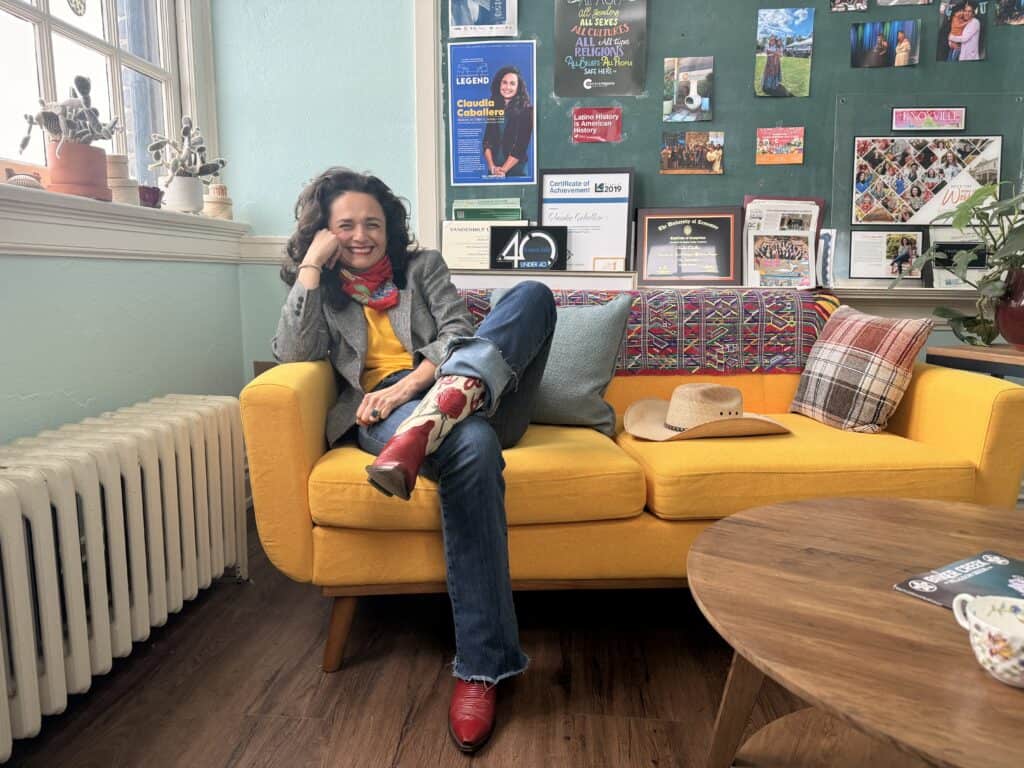
What makes Claudia’s approach to this ending distinctive is that she’s been documenting this entire process — not just living it, but building a living record of her own becoming.
It started in 2023 as a Google Doc she called “Claudia’s Existential Crisis,” well before she received the message that she had other lives to live. It was just a place to capture advice from coaches, consulting conversations, and thinking groups she had across the country. She gave everything a name and a date so she could search for it later. “I have ADHD,” she explains. “I have ideas, I write them somewhere, I put something somewhere else, and then I don’t have a way of looking back. Google Docs tabs changed my life.”
The document kept growing. By this year, she’d renamed it twice — first to the Existential Evolution, then to the Existential Revolution.
“I went from calling it an existential crisis to an existential evolution and now it’s the existential revolution,” she says. “A coach I met with misheard me and thought I said ‘revolution’ and I was like — you know what? That’s what it is!“
The tabs now include:
- Core values exercise — after working with an executive coach, she learned values serve as a sieve to make life decisions. Her first value: health and well-being. (She was very ill for many years from work related stress. The lesson landed.)
- Five Other Lives — if nothing could stop you, if there were no limits to reality, what five other lives would you live? She approached it by location first, careers second. “I would live in the high desert in Utah. I would live on the beach in Mexico.” The careers followed.
- 100 people to contact — from the Sh*t, I Just Quit My Job podcast: make a list of a hundred people, mentors, friends, people you met at a conference, someone you find interesting, and work through it naturally. “Not like this week I’m doing five. No — it’s whoever feels right.”
- 100 things she wants to do in this life — a mix of wild ideas and really simple ones. “I really want to read this book” counts.
- Financial independence research — not the “buy five houses and live off the rents” version. The housing hacks version. How do you do what you want without being independently wealthy? (She has a tab with her ad for a housemate ready for when she’s on sabbatical. She’s not ready yet. The tab is.)
- Camino de Santiago planning — she wanted to walk the Camino when she was 18 and couldn’t afford it. A team member brought it back up mid-process and the dream reawakened. Itinerary, packing list, book recommendations people have sent her.
- What am I going to work on tomorrow — because she’s a real nerd and she knows herself.
How Claudia’s Approaching the Revolution
Claudia’s approach to leaving reveals a set of principles that are worth sitting with — not just for folks thinking about transitions, but for anyone who’s had the quiet voice getting louder about “what’s next.”
She learned to separate external pressure from internal knowing. After finishing her MBA in 2023, everyone was asking “what’s next, what’s next?” She started to assume those feelings were hers. They weren’t. “I realized I didn’t need something bigger or better. I was actually really happy with what I had. It was external pressure telling me that.” Naming that distinction — this is mine, this is theirs — gave her back her own compass.
She chose language that honored the transition. When telling her Spanish-speaking staff, she chose “step aside” over “resign” — because renunciar just feels like failure. “Stepping aside is a choice you can make from a place of joy. My turn is done — I’m stepping aside. There’s another joyous thing waiting to exist. There’s another version of this organization that’s going to be created, and it’s someone else’s to tell.”
She embraced what she’s actually good at — and let go of what she isn’t. “It feels so great and liberating to say, ‘You know what, I start things. I don’t think my skills are needed for the next cycle of this organization.’ I was trying to be good at keeping things stable for a couple of years. I didn’t even realize that’s what I was doing. It’s so freeing to lean into the things you’re really good at.”
She designed a gentle transition — on purpose. The plan: board chooses a CEO by December, she trains them January through March, then spends April through June doing all the institutional memory work she never had time for while running the organization day-to-day. “Transitions often seem so violent, right? Like ripping a band-aid or breaking off a branch. I don’t want that for myself and I don’t want that for my team or for the organization. I’ve given my love and a decade of my life to this.”
AND she gave herself permission to not have it all figured out yet. “I don’t want to start the next thing from the bottom, scared that I need this, needing to just take whatever job comes. I want the job that fulfills my soul and brings me enough financially that I’m building toward my legacy. I turned 40 this year. From zero to 20, life happened to me. From 20 to 40, I was relentless in healing. The rest of my life is mine.”
If You Want Help
Claudia Caballero is happy to connect with others navigating similar moments of transition: the quiet voice getting louder, the uncertainty about what’s next, the work of leaving well.
She’s a good fit if:
- You’re a nonprofit leader sitting with the question of whether it’s time to step back — and you want to talk to someone who’s actually in it
- You’re trying to design a gentle transition and don’t know where to start
- You want a thought partner who will tell you the truth about what it feels like from the inside — not a polished version of the story
- You’re somewhere between “existential crisis” and “existential revolution” and would just really like to talk to someone who gets it
Note: Claudia will be traveling until December 2026 and may be slow to respond. In the meantime, you can follow her journey on Instagram at @claudiacaminando.
Connect with Claudia!
Try This Yourself
Claudia’s Stepping Aside Toolkit (adapted from Claudia’s Existential Revolution Document)
- Claudia’s Core Values Exercise: A five-step exercise for finding the five values that will guide every big decision you make.
- Claudia’s Next Chapter Questions: Four big, spacious questions for dreaming your next chapter before you have to decide anything.
- Claudia’s Transition Timeline: Claudia’s actual month-by-month plan, from announcing her departure to walking the Camino.
- Claudia’s Stepping-Aside Email: The out-of-office message Claudia sent when she left Centro Hispano — warm, honest, practical, and completely unapologetic.
Recommended Reads / Listens
- Podcast: Sh*t, I Just Quit My Job by Maricella Herrera — interviews people going through major career transitions, with exercises and activities woven throughout. Claudia says: “It was very validating — I realized I was already doing so many of these things.”
- Book: It Didn’t Start With You by Mark Wolynn — on epigenetic trauma and how we show up in the world. “I am learning so much about myself and how I show up. It’s been absolutely fascinating.”
- Research on attachment styles and how they show up at work — “You can’t be a good leader unless you’re thinking about this. At least, I can’t be the human leader I want to be without those elements.”
Questions you might want to sit with
Here are some questions to sit with after reading this story…
- Is there a voice that’s been getting louder in you about “what’s next” — and are you listening to it, or finding ways to stay busy enough not to hear it?
- What language are you using to describe a transition you’re navigating — and is that language helping you move through it or making it heavier than it needs to be?
- Where in your life are you working hard at something that isn’t actually your strong suit — and what would it feel like to finally say that out loud?
- If you created your own Existential Spreadsheet, what would the first tab be?
- What would a “gentle transition” look like in your context — for you AND for the people you’d be leaving behind?
- What’s the difference between external pressure telling you it’s time and your own soul telling you it’s time? What does each one feel like in your body?
Not sure Claudia‘s the right fit? Talk to Helia directly!
This article comes from a coffee chat with Claudia in August 2025. These conversations form the heart of the Helia Library — because I’ve learned the most from doing and from talking with other doers willing to share their wisdom. We don’t need to start from blank pages or do everything alone.
As always, take what’s helpful, leave what’s not, and make it your own
About the Contributor
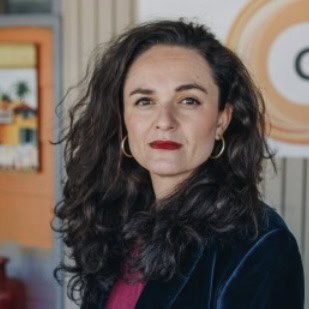
Claudia Caballero is a Peace Corps baby, born in Honduras to an American mother and Honduran father. She’s the oldest of five, has always been a leader and always been bossy and is not sad about it. After growing Centro Hispano from a $60K unfunded budget to a $3M organization in Knoxville, Tennessee, she’s now planning her Camino Santiago journey while building her Existential Revolution spreadsheet — which may become a book, she says, because “there will be hundreds of people by the end of this giving me nuggets of wisdom and kindness and gifts of all sorts.”
She will never live without an executive coach again. She has 25 books in her emotional support pile. Her cats use the upstairs of her house but she doesn’t, and she is ready when she’s ready to rent it out.