Long Story Short
Panic isn’t a strategy. Helia Collective Member Cindy Vatalaro has spent 36 years inside of state government watching the ebb and flow of funding and her message right now is: stay focused on what you know today, follow the breadcrumbs to the folks that share your goals, and keep doing the work. The government was never going to be the solution to all social crises. But we can be — when we take the time to build the right relationships before we need them. Cindy’s How to Find Your Government Human Toolkit is a great place to get started.
Why We’re Sharing This Story
I’ve spent most of my career putting faith in systems — government, policy, social enterprise, the right nonprofit model, the right scale, the right funding stream. At some point, each of those things cracked. Not because they were bad, exactly, but because they were never quite the whole answer. Even if I wanted them to be.
I wrote a piece called “Finding My Faith” on my Substack a while back that was my attempt to trace that whole arc — the slow realization that there is no institution, no framework, no administration, no funding structure that can carry the entire weight of what we’re trying to do in the social sector. “If government alone could solve homelessness or keep all kids safe, we would already be doing it.” I didn’t write that. Cindy said it. AND it’s a truth that I have been circling for years without being able to say it that cleanly.
What I feel right now, and I suspect a lot of you do too, is a particular kind of anxiety that comes from uncertainty.
- We’ve built programs and budgets around funding structures that now feel shaky.
- We’re watching budget hearings we don’t fully understand.
- We’re doing math in the shower at 6 am.
- We’re reading every headline and feeling either outrage or dread, and sometimes both, before breakfast.
Personally, my anxiety was higher than it had been in a long time. Then I talked to Cindy, who reframed things for me: we just don’t have the capacity to spiral and spin and get stuck in the mire. We must put our energy into what we know now and what we can do now. That’s it. That’s the whole move.
Cindy is, without question, the most effective government person I’ve ever worked with. She’s entrepreneurial, gets things done, thinks differently — both strategically and tactically. She’s been navigating funding uncertainty for 36 years in California’s foster care system, supporting over 14,000 young people in care every year with never enough money. This isn’t new for her. And she has something really useful to share about how to stay grounded and keep going.

Cindy’s Story
As told by Cindy Vatalaro
How government funding actually works
As a government agent, we’re constantly in these states of financial flux. Sometimes the money flows, other times it’s halted abruptly with no relief in sight.
State government funding is complex and doesn’t manifest overnight. We have our state budget with our own money and priorities AND we have the federal budget that we need to incorporate into our local landscape. These federal grants usually come with a “match” of state dollars as a condition to participate.
Think of it like a diverse portfolio. If funding runs short in one area, there’s another we can usually pull from. For the programs I oversee for older foster youth, we’re getting some federal funding, but it is not nearly enough to cover the actual needs of over 14,000 youth each year who are in foster care, nor the additional 3,000 who elect to stay beyond age 18. So, we try to cover the rest with funding from other sources like philanthropy or other applicable budget line items.
Even then, at the end of the day, all of the funding streams just aren’t enough money, period. We’re limping along with everything else that’s coming into play. Counties are already struggling to operate and provide the full range of services — this is already our status quo.
Potential cuts don’t necessarily make me panic because we’re constantly operating in this space of need. Cuts won’t change everything because federal money is NOT the sole source. And if it’s that important, if something’s effective, we will find the money.
The realization: Government is not the solution to the social crisis
Some believe that if the government can take over the work of solving social issues, that it will be done better. And I’m here to say… we can’t do it. At least, not alone.
Part of why the government isn’t usually the best option to carry out the actual work is because there are so many rules and exceptions tied to all the funding. People want to see prudent spending with their tax money, so there are a lot of internal processes that take place just to talk about any kind of money that comes into play.
Take something as simple as me, a government agent, sending a text. I’d like to reach 14,000 youth in foster care ages 16 to 18 and tell them: “File your FAFSA. There’s this new program. Your guardian scholar is available.”
From a government perspective, I’d have to put together a proposal, make sure I’m not sharing any client information, collect phone numbers from kids who already see us as an entity that is policing and surveilling them. At best, it would take months — and still go out to a lot of wrong numbers.
Whereas an organization where youth already go for help? They can send that text within an hour.
We can write policy and legislation and all the laws we want, but none of that can change the human factor. I cannot write a law or a policy that will tell people how to interact and be human. The human connection is core to the work we do. And that’s the truth.
After years in the system, I finally realized: I am 100% government. I can’t always do the human things, so I need partners who can.
After years in the system, I finally realized: I am 100% government. I can’t always do the human things, so I need partners who can.
“We just don’t have the capacity to spiral and spin and get stuck in the mire”
We’re hearing a lot of… “Oh, the federal government is cutting programs; they’re cutting Medicaid. Oh my god, you guys are next. What are you going to do?”
And my answer is: we don’t know what to do because it hasn’t happened yet. So we can either continue to worry or we can just take that energy and put it into action for what we know now and what we can do now.
As of today, no direct federal grants in child welfare have been cut, so we are still going about our business as usual. That’s where, when I think about all the things I’m responsible for, I need to stay focused on the bigger prize, which is supporting these kids no matter what. No matter what.
So this is what I’m doing right now:
- Remembering why I’m here. If the federal funding gets cut, then we will continue business as usual for as long as we can. We will keep doing the things.
- Researching other funding sources. Is there unspent money to move over? (Note — there almost always is!)
- Nurturing relationships with funders and partners. Do we need to fill a gap? Is there philanthropy that can step in? Are there more partners we can leverage?
Will there be an impact if there are cuts? Yes, AND we and all of our partners are going to rally around it and carry out the work.

I love exploring other countries and cultures, especially with my grown son!
Partnerships are what actually move the needle
If government isn’t always designed to carry out the work alone, then we need non-governmental partners to help us cross the finish line. AND we need to build those relationships BEFORE we need them. Here’s what that looks like in practice:
When there IS funding but the government can’t do the work — Using the example above, I have money and want to reach 14,000 foster youth about filing FAFSA. Using government alone, you are looking at months of proposals, wrong numbers, kids who don’t trust government messaging. With a partner — for example, a non-profit that works directly with foster youth — it can be done within an hour. They tell us, “We sent your text out to the kids that we know,” and the kids respond! A trusted relationship gets better response rates and a faster turnaround.
When funding gets cut and someone needs to step in — Say I’m $500K short for education vouchers. That’s 100 kids who can’t attend college through no fault of their own. That’s when I pick up the phone. I come at people with data, a strong problem statement, where my shortage is and why. I get a breadcrumb here and a breadcrumb there until I find an org that will say, “Yes, college access is one of our pillars. We can help you.” And then I work that partnership through.
For a foster youth who didn’t have that nurturing, who’s really trying to get themselves positioned for long-term stability, we find that people are there. They really are. It’s just a matter of making connections and following breadcrumbs.
And it works in the other direction, too. Government money flows in ways most nonprofits never see coming. One week you hear “there’s no money,” and the next week, someone gets an email saying “we have $44 million to spend in the next 8 months.” The organizations that benefit from those unexpected opportunities are the ones that already have relationships in place.
So if you’re wondering where to start: Find your government human. Not a department, but a person. Someone who has chosen this work because they care. Use LinkedIn, attend a public meeting, comment on their posts, ask for a mutual introduction. Come with a clear problem statement and your data. Follow the breadcrumbs. Build a relationship
If You Want Help
Cindy Vatalaro is at the California Department of Social Services and is one of the most creative, mission-driven government humans you’ll ever meet. If you’re in the foster care or older youth space and want to explore a partnership, she means it when she says, “Come help me.”
Connect with Cindy!
Try it Yourself
- Toolkit: How to Find Your Government Human — a step-by-step guide inspired by Cindy’s approach to building government relationships
- To track state legislative sessions, start at your state’s official legislative website (find yours at Congress.gov). Third-party platforms like LegiScan and BillTrack50 offer more comprehensive tracking across states.
Questions to Sit With
- When was the last time a project I thought I delegated boomeranged back to me? What was actually missing?
- What am I holding onto that I could delegate if I spent 15 minutes setting someone up properly?
- Is my bias on each project clear to me AND to my team — time, budget, scope, or quality?
- Where am I hovering because I wasn’t clear upfront about when I wanted to check in?
- If someone else has final say on what I’m working on, have I gotten aligned with them on the parameters — or just the process?
Not sure Cindy‘s the right fit? Talk to Helia directly!
This article comes from a coffee chat with Cindy in June 2025. These conversations form the heart of the Helia Library — because we’ve learned the most from doing and from talking with other doers willing to share their wisdom. We don’t need to start from blank pages or do everything alone.
As always, take what’s helpful, leave what’s not, and make it your own.
About Cindy
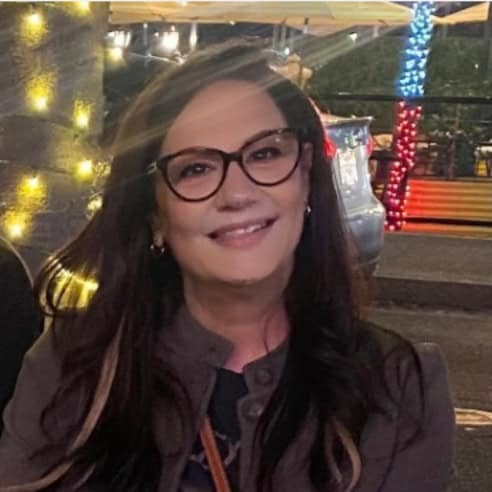
Cindy Vatalaro serves as Bureau Chief at the California Department of Social Services, where she oversees policy development for the nation’s largest foster care program. What makes her special isn’t her title — it’s her relentless entrepreneurial spirit inside a system that usually doesn’t reward that. She thinks in breadcrumbs, builds relationships before she needs them, and will talk to absolutely anyone who’s trying to help kids. When she talks about her work, what comes through most is someone who just genuinely refuses to give up.