
Long Story Short
The people closest to your work already know what’s working in your organization and what isn’t. The Discovery360 is the tool that finally helps you hear them — and do something about it. Check out our Discovery360 Toolkit if you want to jump right in.
Jump to How!
Have you ever watched Undercover Boss? Confession: I’ve never actually sat down and watched a full episode, but I LOVE LOVE LOVE the concept. Some CEO goes undercover in their own company and discovers — surprise! — that the people on the front lines know exactly what’s broken, exactly what’s working, and exactly what would make the whole thing better. The only reason leadership didn’t already know? They didn’t ask.
Here’s a great example of when an Undercover Boss approach would have come in handy: At Revolution Foods, we spent millions on outside consultants to improve our operations. They came back with tracking clickers attached to trash cans to measure food waste — all of which were broken or stolen within a day — and scheduling systems that looked great in a spreadsheet and made zero sense for the humans actually doing the work. If we would have just asked the people running our lunch lines about food waste or talked to our Ops Team about scheduling system issues, we could have saved an enormous amount of money AND given our team members agency in solving the problems that were giving them headaches.
After twenty years of leading organizations, I’ve learned that sometimes you think you’re asking. You make it a point to walk the hallways, you’re in the meetings, you think you have a real read on things. But you’re still only seeing part of the picture.
That’s because what you can see depends entirely on where you sit. Your team sees things you don’t. Your partners see things your team doesn’t. The person closest to the actual work — running the line, managing the relationship, navigating the day-to-day reality — has a view of what’s working and what isn’t that will never make it into your weekly check-in unless someone specifically creates the space to ask and listen.
And it’s not just about problems. It’s about the whole picture:
- What are we actually great at — the real secret sauce, not the version in our deck?
- Where is the energy flowing, and where is it completely depleted?
- What ideas are sitting in people’s heads right now that nobody has thought to ask for?
- What’s the thing underneath the thing — the underlying dynamic that keeps showing up in different forms — that we all feel but haven’t quite named yet?
After twenty years of partial pictures and expensive assumptions, I’ve finally internalized what an early-career mentor told me over and over: Making space to ask and really listen is always worth it — even when your to-do list is unending, and every instinct is screaming at you to just keep moving forward and getting things done.

Making space to ask and really listen is always worth it — even when your to-do list is unending and every instinct is screaming at you to just keep moving forward and getting things done.
The tool that finally helped me listen to every part of my organization – and take action!
I was tired of making this mistake over and over again, so I built a tool to take me from listening to action. The Discovery360 is Helia’s answer to the question every leader eventually faces: How do I actually see my whole organization?
You know how a traditional 360 Performance Review works — you get feedback from all directions, and suddenly you can see things about yourself that you couldn’t see alone. The stuff in your blind spot. The strengths others notice that you’ve stopped noticing. The patterns that are totally invisible from the inside.
The Discovery360 does the same thing for your organization.
It shows what leadership sees. It shows what your team sees. It shows what your partners, your clients, your community see.
It’s a way of expanding what you can see from your seat in leadership by genuinely asking the people who are living inside the work, centering their wisdom, and building from what’s already strong. Not a gotcha exercise. Not a list of problems to fix. A real look at the whole picture — in a way that feels good to participate in, builds trust, and gives you something worth celebrating AND something worth building toward.
The Key Takeaway
If you want to know what’s going on with your organization, you have to take the time to ask everyone.
That’s exactly what the D360 does. If your organization is small, we mean “everyone” literally. If your organization is large, “everyone” means people at every level fill out the Discovery360, not just leadership and a few key staff members. And, when possible, we ask customers, alumni, community partners — anyone who touches the work.
The Discovery360
If you’re a “just tell me what to do, and I’ll get started” kind of person (aka Helia’s COO Libby), the Getting Started Guide in the Discovery 360 Toolkit walks you through the whole approach. But here’s the short version:
- Step 1 — Survey everyone. Not just leadership. Everyone who touches your work — team, partners, clients, funders, volunteers. Cast the widest net possible.
- Step 2 — Start with strengths. Lead every survey and every conversation with what’s working before you ever get to what needs to change.
- Step 3 — Go deeper with interviews. Once themes emerge from the survey, select a diverse group for 30-minute conversations. Listen. Don’t respond, don’t defend — just hear.
- Step 4 — You now have a gift. Share back what you learned — always, publicly, specifically. Then decide what to do with it.
- Step 5 — Use it as your foundation. This isn’t a one-time exercise — it becomes the thing you return to whenever you’re planning, shifting direction, or just need to get grounded again.
If you’re a “I want to understand the full picture before I dive in” kind of person (aka our Founder Jess) — read on. Because there’s a lot more to say about how each of these steps actually work, where things go sideways, and how AI fits into the picture in ways that might surprise you.
How the Discovery360 Works
Step 1 — Survey everyone (and we mean everyone)
The temptation is to start small. Survey the leadership team, maybe a handful of staff, see what comes back. Resist it. The whole point is to hear from the people you don’t usually hear from — the ones whose perspective never quite makes it into the room where decisions get made.
That means team members at every level, AND — when it makes sense — customers, partners, funders, volunteers, alumni. The more perspectives you gather, the fuller the picture. And the fuller the picture, the harder it is to explain away what you’re hearing.
One thing we’ve learned that makes a massive difference is, instead of sending the survey and hoping people complete it on their own, set up a team meeting and do a live facilitation of the survey, walking through the questions together while everyone answers independently on their own devices. Participation goes way up. AND the energy in the room is completely different when people realize everyone is doing this together.
We love open-ended questions that let folks go where their energy naturally takes them. Some of our favorites: What’s the “secret sauce” here — what does this organization do better than anyone else? And the I Like, I Wish, I Wonder framework, which is a simple prompt that opens up thinking in a way that feels generative rather than evaluative. Asking folks to name ONE thing they’d want the organization to focus on in the next 3-6 months and why — consistently produces the most specific, actionable responses we hear.
Here’s where it gets exciting: once your responses are in, AI can help you find the patterns. Not instead of reading through yourself — you should always do that first, even just a skim — but as a research assistant that helps you organize themes across hundreds of responses without drowning in spreadsheets.
Step 2 — Start with strengths
I know, I know. It can feel almost counterintuitive — like you’re wasting time on the good stuff when you really want to get to what needs fixing. But here’s what happens every single time you lead with strengths: people light up. They get specific. They tell you what they actually care about. And then, when you get to the harder questions, they’re already engaged and thinking constructively about the organization.
The answers will surprise you. I promise. AND they’ll tell you so much about what’s working and what you’ll want to protect and build on — not just what needs to change.
Step 3 — Go deeper with interviews
The survey tells you what people are thinking. The interviews tell you why.
After your themes emerge, select about six 30-minute conversations — individuals or small groups — with a genuinely diverse slice of your organization. Think about tenure, role, department, identity, generation, lived experience. You want the full picture, not just the perspectives that are easiest to access.
Don’t share questions or themes in advance — you want live, authentic reactions, not prepared answers. Come in with what you heard in the survey and go deep: We saw this theme come up a lot — what does that actually look like in your day-to-day? Can you give me an example?
Your job is to listen. Not respond, not explain, not defend. Just hear.
The answers will surprise you. I promise. AND they’ll tell you so much about what’s working and what you’ll want to protect and build on — not just what needs to change.
Step 4 — You now have a gift
After the surveys and interviews, something shifts. You have real information — themes, patterns, stories, specific examples from people across your organization who trusted you enough to tell the truth.
That’s a gift. And what you do with it is up to you.
At minimum: share it back. Always. Across the whole organization, starting with strengths, being honest about the challenges. When people share something and never hear what came of it, the message they receive is that it didn’t matter. The act of sharing back — specifically, generously — is itself a trust-building move.
Beyond that, this information can factor in in all kinds of ways: small shifts in how you operate day-to-day, different prioritization on decisions you were already wrestling with, significant new initiatives you wouldn’t have known to pursue.
Some of what you learn you’ll act on immediately. Some will sit in the back of your mind and surface when the moment is right. Some will confirm things you already suspected and finally give you the language to name them.
There’s no single right answer for what to do with what you learn. But something should change — and people should be able to see it.
Step 5 — Use it however makes sense for you
The Discovery360 isn’t a program with a prescribed ending. Once you’ve done it, you have something you can return to in whatever way fits your organization.
Some folks use it as the foundation for annual planning — the findings become the first input before any priorities get set. Some use it to prep for retreats, so the conversation in the room is grounded in real feedback. Some bring it into department meetings when a team is stuck or a decision feels murky. Some leaders use it every time there’s a significant transition — a new hire, a new phase, a moment that calls for getting reoriented.
The organizations that get the most out of it are the ones who keep coming back to it. It becomes shorthand: Remember what we heard about X? That’s relevant here. It becomes proof that listening is part of how you operate — not just something you do when things feel off.

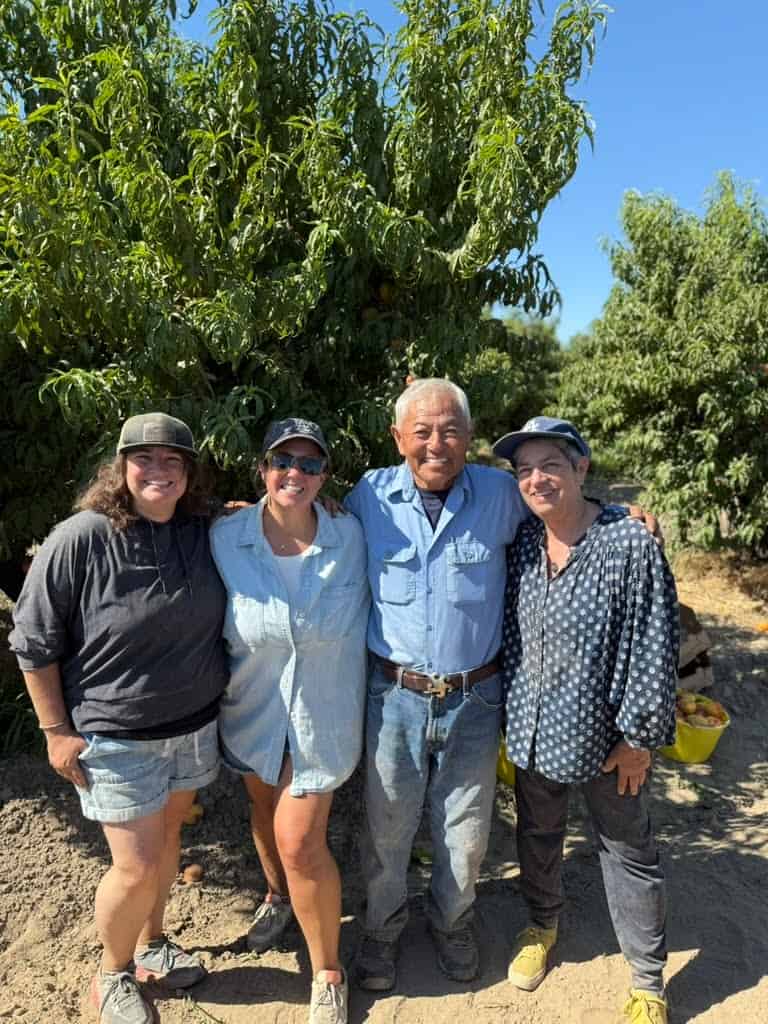
Jess with a WISE human, Sujata Narayan, who taught her EARLY in her career that taking the time to hear from others — asking the questions, making the space — is very much ALWAYS worth it (even when she wants to be driving ahead and getting things done!). Note: Jess has had to be reminded of this over and over and over by countless wise humans (Pat Donovan, Emmy DeFigueiredo, Liz Mills to name a few), and Sujata gets some of the original credit!!!
When to Do This Yourself vs. Bring Someone In
The full Discovery360 — surveys, interviews, synthesis, report, share-back — is absolutely something you can run yourself. We built all the templates in the toolkit so that you could. And honestly, doing it yourself has real value: the relationships you build in those conversations, the firsthand experience of hearing what your team actually thinks — that’s not something you want to outsource entirely.
That said, there are moments when having someone outside the organization run it makes a real difference:
- When you’re a new leader, and you want people to feel like they can tell the truth without worrying about how you’ll receive it
- When something feels off but you’re not sure what — and you’re worried your own proximity might be part of why you can’t see it
- When you want the synthesis and report done by someone with no stake in the outcome
- When you’re heading into a significant planning process and want findings that leadership can trust as genuinely independent
- When you just don’t have the bandwidth to run it well AND lead your organization at the same time
If You Want Help
The Discovery360 is a Helia offering — we run it, we learn from every engagement, and we genuinely love this work. If you want a thought partner to figure out whether this is the right moment for your organization, or you want us to run the whole thing alongside you, we’d love to talk.
We’re probably a good fit if:
- You’re a new leader wanting to understand the lay of the land before you set direction
- You’re heading into planning and want your strategy grounded in what’s actually true right now
- Something feels off but you can’t quite name it — and you want help figuring out what you’re actually dealing with
- You want your whole team using the same language and approach
- You want to build a culture of listening and this feels like the right place to start
Connect with Jess!
Try it Yourself
- Getting Started Guide — Your step-by-step roadmap to your first Discovery360
- Sample Survey Questions — Ready-to-use questions for team and stakeholder surveys
- Sample Project Plan — Full timeline and task breakdown
- How to Use AI to Analyze Discovery360 Results — A practical guide for finding patterns without drowning in data
- Sample d360 Report — A real (anonymized) example of what Discovery360 findings look like in practice
Recommended watching:
- Undercover Boss — CEO of 7-Eleven goes undercover — okay fine, I still haven’t sat down and watched a full episode. But the concept!!!
Recommended reading:
- Radical Candor by Kim Scott — not explicitly about 360 feedback, but on why feedback culture matters in the first place. A favorite of Helia’s COO, Libby Fischer.
Questions to Sit With
- When was the last time I asked instead of assumed? What if my team already knows exactly what we need to do differently?
- Who in my organization am I not hearing from — and what might they know that I don’t?
- If I learned something uncomfortable from a Discovery360, would I actually be willing to act on it? What would get in the way?
- What would it feel like for my team to be genuinely asked — and genuinely heard?
- Am I building a culture of listening, or a culture of informing?
The Discovery360 is a Helia original — built from years of working alongside organizations and learning, over and over, that deep listening is where everything good starts. We’re still refining it, and we’d love to hear how it works for you.

About Jess
After two decades of making assumptions and getting surprised by what she didn’t know, Jess Skylar has learned that curiosity beats certainty every time — and that the folks closest to the work almost always have the best ideas. The Discovery360 is her attempt to make sure those ideas actually get heard AND actually go somewhere.
She is still thinking about those trash can clickers. Some lessons stick.