Long Story Short
Want to win a grant? Build your proposal backward from how it’ll be scored. A grant isn’t scored on how good your idea is or the beauty of your writing. It’s scored on a rubric, and the reviewer can only give you points for the specific thing they’re looking for, on the specific page they expect to find it.
Libby here!
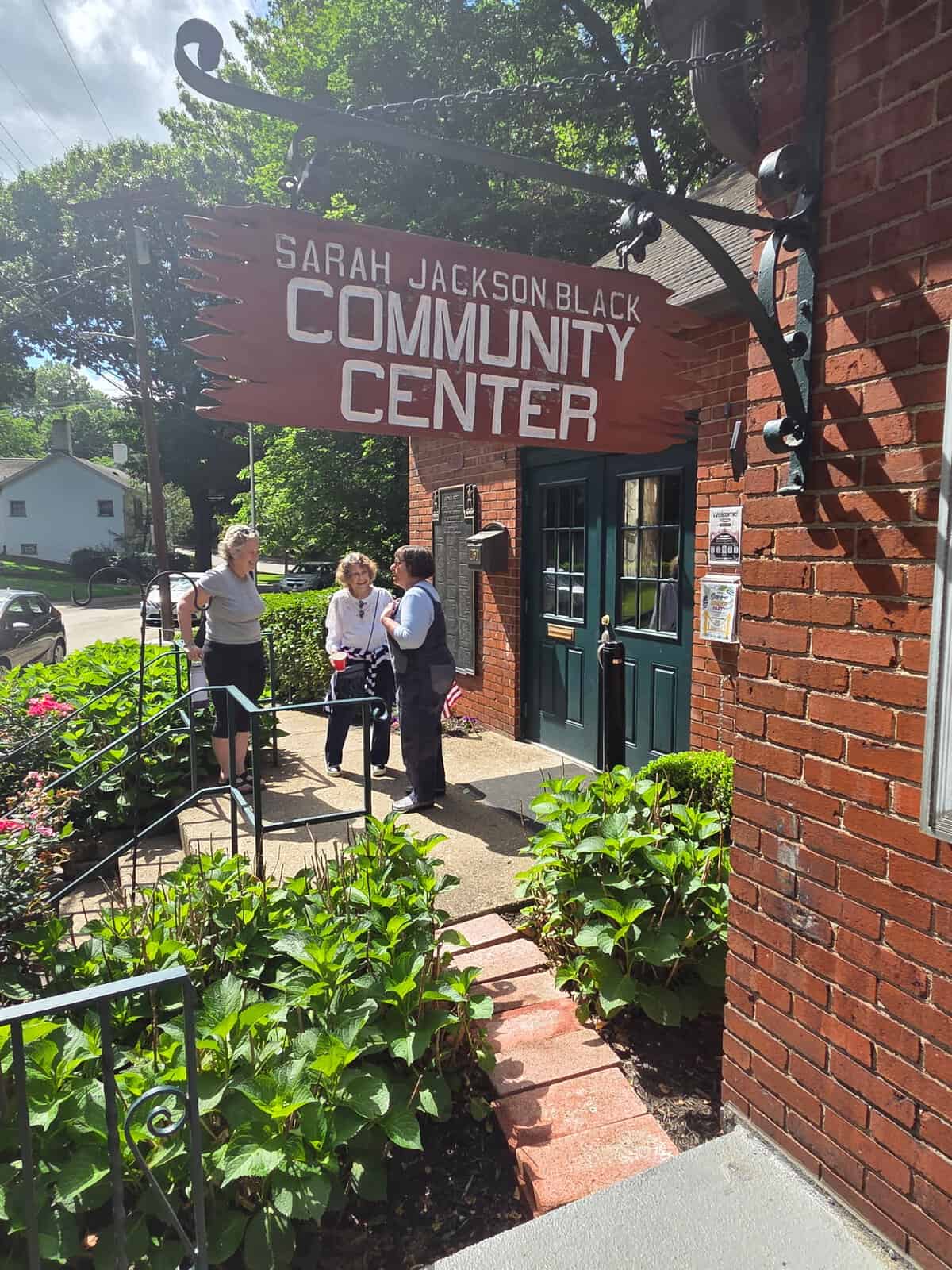
There’s a magical building in my neighborhood. It’s not a Instagrammable coffee shop or a trendy brewery — it’s a musty smelling community center that used to be a cow shed. A bunch of neighbors got together to build it in 1938, and from then until the 1990s it was the beating heart of the neighborhood: dances, weddings, spaghetti dinners, Boy Scouts practicing archery inside (a more relaxed era, clearly). Then it fell into disrepair, the way these places do when everyone assumes someone else is taking care of it.
A few years ago, a handful of neighbors — me now among them — decided to bring it back. It started with a Halloween parade, then the neighborhood Garden Club started meeting there, and now there are quarterly block parties and monthly crafting meetups and a weekly coffee klatch for seniors (which is legit one of the most joyful things I’ve experienced in a while).
AND, in the middle of revitalizing it, we discovered something nobody expected: the place we’d all assumed was a nonprofit… wasn’t.
So, we applied and, after two years of bumps in the road, we finally got our non-profit status!
There’s just one catch. We got that nonprofit status for a reason: so we can apply for grants to fix up an 87-year-old building that very much needs fixing. Which means the reward for all that hard work is the exact thing that scares me most: fundraising.
Confession time: I find asking people for money terrifying. I’d rather underpay myself and work extra hours to bootstrap something than have that conversation. It’s especially ironic given that one of Helia’s superpowers is fundraising consulting — it’s some of the best work we do. (Hence why I’m Helia’s COO and not one of its fundraising consultants.) So now I’m sitting here, president of a tiny, all-volunteer nonprofit, staring at a pile of grant opportunities, with absolutely no idea where to start.
And the thing is, the ask is only part of the fear. Just as scary to me is not knowing — walking into a system where everyone else seems to know the rules and you’re pretty sure you don’t. Grants feel exactly like that. Opaque. Judged by criteria you can’t see. Like there’s a secret handshake and nobody taught you.
Which is exactly why I called someone who knows the handshake — because it turns out the thing standing between you and that grant money usually isn’t courage. It’s that nobody’s shown you how the game works.
The person who has sat on both sides of the grantmaking desk
I’ve only recently met Jenee Fortier — she came Helia’s way through Collective Member Sophia Zisook (when Sophia says someone’s good, they’re good) — but it took about one conversation to understand why Sophia sent her to us. She’s brilliant, thoughtful, and she knows her stuff about grant writing. Today Jenee is a grant writer, but before that, Jenee was a grant funder. At the Massachusetts Office for Victim Assistance, she was the person on the other side of the desk reading and scoring hundreds and hundreds of grant applications
As a funder, Jenee saw proposals over and over that were beautifully written by people who clearly knew their mission and meant every word. BUT she couldn’t fund them because they hadn’t answered a specific question on a specific page of the rubric.
When she crossed over to the other side of the desk as a grant writer — first for county court programs then for a big foundation — she became the one applying for funding (“back when you had to deliver three hard copies”). And she deliberately took everything she’d watched go wrong from the funder’s chair and built her whole approach as an applicant around fixing it.
That’s a rare vantage point. Most grant writers only ever see their own side of the process — the part where you pour yourself into a proposal, send it off, and wait. Jenee has held the scoring sheet. She knows what the reviewer is actually doing on the other end, because she was the reviewer.
Here’s what she knows: the person reading your grant isn’t looking for the best idea. They’re looking for points on the rubric— and they can only give you the points you’ve made easy to find.
This really works for Jenee as she is a self-described rule-follower. She’s the one reading the “DO NOT ENTER” sign on the door while everyone else is walking in, saying, “Um, are we sure, guys??” In grant writing, that instinct to follow the rules — or, follow the rubric — turns out to be a superpower. Unsurprisingly, Jenee’s proposals get funded a lot!
The Key Takeaway
A grant isn’t scored on how good your idea is or the beauty of your writing. It’s scored on a rubric, and the reviewer can only give you points for the specific thing they’re looking for, on the specific page they expect to find it. Which means a beautifully written, deeply mission-driven proposal can lose to a clunkier one that answers every question exactly as asked. So, before writing a word, work backward from the rubric. Write to score, not to impress.
Jenee’s Grant-Writing Process
Jenee’s process isn’t about writing prettier proposals — it’s about treating a grant the way she treats everything: as a set of rules to follow exactly, in the order the funder lays them out.
If you’re a “just give me the steps, I’m ready to get started” kind of person (aka Helia’s COO, Libby), here they are, along with Jenee’s Sample Federal Budget Template to help you get started.
- Step 1: Find a funder that cares about your mission — research who actually funds work like yours and how much they typically grant before you write a single word
- Step 2: Pressure-test eligibility and the attachment lift — make sure you’re actually eligible AND can produce every form, MOU, and certification by the deadline
- Step 3: Build the document from the rubric, not your mission — copy the scoring criteria in first, then make everything else match it
- Step 4: Write to score, not to impress — optimize for points, even when it means the writing sounds clunky
If you’re a “tell me why this works” kind of person (aka our Founder, Jess), read on for the details.
How These Steps Win You the Points
Step 1: Find a funder that cares about your mission
Funders don’t fund every idea that comes across their desk. They fund the things they care about.
So before writing a single word, Jenee recommends starting with research. Start with your peer organizations — who else out there does the kind of work you do? Head to their websites, see who funds them, and then pull those funders’ 990s. Then scroll to the bottom and find the list of every grant they’ve made, recipient by recipient and dollar by dollar. By the time you’re done, you’ve got two key sets of data:
- the funders who back work like yours and
- the range they actually write checks in.
Here’s why that matters so much — funders don’t have time to right-size your budget for you. So, you do it for them. You find the ones whose mission genuinely lines up, you aim at the dollar amount they already give, and you build your budget and your program around that target, instead of around some number you picked out of the air.
There’s a deeper reason to start here, too. So much of this money sits behind closed doors — invitation-only foundations, a whole universe of funding that smaller orgs never even get to see. You can’t fix that overnight, but research can help you stop pouring scarce hours into doors that were never open in the first place, and find the ones that are.
Step 2: Pressure-test eligibility and the attachment lift
There are two questions to answer before you commit to an application. The first is eligibility: are you actually eligible? Not “maybe, if we stretch the definition a little” — truly, unquestioningly eligible. As Jenee puts it, the goal is to not waste anyone’s time, least of all your own. The second is the lift: what will the requirements actually take? The MOUs, the certifications, the forms, the attachments — do you already have them, or can you realistically pull them together before the deadline?
This is unglamorous work, and it’s also where applications quietly fall apart. For every grant, Jenee maps out each requirement, who owns it, and when it’s due, so nothing slips through in the final scramble. It sounds almost too basic to mention, AND it’s often the difference between a submission that makes it in and one that doesn’t. The format and the deadline aren’t afterthoughts; they’re part of the rubric, too.
Step 3: Build the document from the rubric, not your mission
This is the difference between a grant that gets funded and one that gets rejected. The very first thing Jenee copies into a blank document isn’t her idea or her mission — it’s the evaluation criteria from the rubric itself. Only then does she paste in the program narrative questions, and that order is deliberate, because here’s the catch nobody warns you about: the two don’t always line up. From her experience on the funder side of the desk, Jenee knows that a notice of funding opportunity tends to get written by committee. Sometimes there are six people involved and it gets messy, even to the point that the questions an applicant is asked and the rubric they’re scored on don’t exactly match. Reconciling them, so that nothing falls between the two, is the whole job.
From there, she labels and orders everything to mirror exactly how the funder scores it. Reviewers work straight down their rubric, point by point, so the kindest (and smartest) thing you can do is make each one effortless to find — in the order they expect it, labeled the way they labeled it.
And the reason all of this matters runs deeper than points. The rubric is meant to be the equalizer: every applicant gets the same categories and the same number of possible points, which is the system’s best attempt at fairness. That rigidity can feel cold and bureaucratic, AND it’s the very thing that levels the field. Once you know how to read a rubric, a tiny volunteer-run shop is suddenly playing the same game as the org down the street with a six-person development team.
Step 4: Write to score, not to impress
Once the rubric is your skeleton, the writing turns into something closer to a puzzle than an essay. If you find yourself asking, “How do I shove this in here? It doesn’t read well, but it’s going to be on the rubric,” you’re doing it right. It’s a game of tetris — fitting everything inside the page counts without going over, and optimizing every line for points.
This is also where Jenee has learned to get honest with clients who want to rewrite a section just to make it sound better. Rather than fighting them, she hands the decision back to whoever’s ultimately signing off:
What matters more to you here? The potential for full points on this section, or getting across the exact message you want the reviewer to walk away with?
Both are completely valid answers. The point is that you’re working inside an imperfect system, so you may as well choose your tradeoffs on purpose. (For what it’s worth, she’s won plenty of grants that were nobody’s idea of beautiful writing.)
A quick word on AI, since it always comes up. Jenee’s relationship with it is genuinely complicated. She doesn’t use it to draft, but there’s one use she swears by. Once you’ve done the writing, you upload the funding opportunity alongside your draft and ask it to find the gaps:
- Where are you light on points?
- What did the rubric ask for that you didn’t quite answer?
You’re not using it as a writer — you’re asking it to play the role of funder to help give your proposal the best shot at winning.

When to do this yourself vs. bring someone in
Honestly? A lot of this you can do yourself, and you should. Pulling 990s to find the right funders, copying the rubric into a blank doc and working backward from it, building a budget off the standard federal categories — none of that requires hiring anyone. It mostly requires the discipline to do it in the right order, before you fall in love with an idea.
Consider bringing someone in if:
- You’re not sure you’re actually eligible — and you’d rather know that before you sink 40 hours into an application
- Your idea doesn’t quite match the funder, and you need help reframing what you already do to fit (without crossing into supplantation)
- The rubric-and-page-count tetris is eating you alive, and you’d love to hand it to someone who finds it genuinely fun (she exists — it’s Jenee)
- You keep striking out and can’t tell why — you need someone who can read your application the way a reviewer would
- You don’t have the staff capacity to chase the funding you need, and you want a thought partner on where to aim
If You Want Help
Jenee Fortier writes grants for nonprofits. And, because she spent years as a funder scoring applications, she writes them the way a reviewer reads them.
She’s a good fit if:
- You’re a small or volunteer-run org staring down your first grants and have no idea where to start
- You’ve got a good idea but you’re not sure which funders actually fund work like yours
- You keep getting rejected and can’t figure out what the rubric was really asking for
- You need to reframe an existing program to fit a new funding opportunity
- You want someone who genuinely enjoys the rules-and-rubric puzzle so you don’t have to
Connect with Jenee!
Try This Yourself
Jenee’s Sample Federal Budget Template — built on the standard federal categories (personnel, fringe, consultants, contractors, supplies, equipment, indirect) so you’re not starting your numbers from scratch.
Recommended reads + resources:
- GrantStation Insider Weekly and Instrumentl — worth signing up for the free newsletters to hear about opportunities
- Moving Worlds — for getting matched with professional volunteers who can help you grow your org
- Federal funding notices — sign up based on specific criteria to catch relevant grants as they post
Go deeper:
- Candid (formerly GuideStar) and ProPublica — where you’ll find the 990s that tell you who funds what, and at what dollar amount
- For the mindset that keeps you steady through the rejections, Jenee points to Sapiens by Yuval Noah Harari and Wintering by Katherine May
Questions to Sit With
- Before you apply for your next grant, have you actually looked up the funder’s 990 to see whether they fund work like yours — and at what amount?
- Who are your peer organizations, and do you know who funds them?
- When you open a funding opportunity, do you start with the rubric — or with your own idea?
- Is there a program you already run that could be reframed to meet a new funder’s goal, without supplanting existing funding?
- When a grant gets rejected, do you treat it as a verdict on your work — or as information for the next one?
- Are you applying to enough opportunities to play the numbers game honestly — or pinning everything on one or two?
Not sure Jenee‘s the right fit? Talk to Helia directly!
This article comes from a coffee chat with Jenee Fortier in June 2026. These conversations form the heart of the Helia Library — because we’ve learned the most from doing and from talking with other doers willing to share their wisdom. We don’t need to start from blank pages or do everything alone.
As always, take what’s helpful, leave what’s not, and make it your own.

About Jenee
Jenee Fortier is a self-described generalist in an age of specialists — a project manager “for a cause” whose career has spanned social work, state government, a foundation, county court programs, and an environmental engineering firm, with grant writing as the constant thread. She’s the person who reads the sign on the door before everyone walks in and asks, “Are we sure, guys?” — and in grant writing, that rule-following instinct is exactly what wins. These days she works on clean water funding, and keeps her head steady through the inevitable rejections with a good book (she’s partial to Sapiens and Wintering).
Work with Jenee