Long Story Short
To make change stick, you need to work side by side with the people being asked to change. Don’t have time to read the article? Our Change Management Toolkit is a good place to start.
Sometimes, the only way to make change is to sit side by side.
Jess here! When I was at Revolution Foods, we landed a huge new client — a school district with 150+ schools. Our success depended on making things work for every single person in that system — the folks ordering the food, receiving it, cooking it, and serving it, not to mention the kids eating it!
It’s important to know that we had never met any of these on-the-ground humans. The entire selection process happened with a few key folks at the district level. There was so much work to do to get our internal operations ramped up to pull off production and delivery for this contract that we got pretty far in the process before we took the time to think about what the folks at each school needed to make this change successful. To be honest, we were too far in the process when we finally stopped to think about them. We didn’t have much time, so the plan was to send out a one-pager, join an all-staff meeting and hope for the best.
In the days leading up to our launch, I couldn’t let it go. People are, well, pretty much always the core to any and all things, and I just kept thinking we needed to invest more time in these folks. So, responsive as always over here(!), I shifted everything on my plate and spent 3-4 days barely moving off my living room floor as I built a better plan. I organized for every school to be visited by multiple team members multiple times. We created welcome packets and flew folks in from around the country (including Helia’s COO, Libby!) and pulled in team members from every department to work side by side with our school contacts as they got the hang of things.
No one-pager or virtual curriculum or easy-to-use handbook was ever going to cut it.
We drove all over the city, day after day after day. We attended countless parent meetings. We ate a LOT of breakfasts in classrooms and lunches in the cafeteria and after school suppers on the yard. Someone sat in the main office of each school basically all day every day.
While it was NOT perfect by any means, it was critical and foundational. By sitting side by side with our users, we learned as much as we taught. We got ideas on how to improve. We saw who had it down and who needed support.
The reality is that no training plan or virtual curriculum or an easy-to-use handbook was ever going to cut it. We needed to be IN it — learning and changing TOGETHER.
I learned something from this that I’ve carried with me in EVERY aspect of my life: Change doesn’t happen through announcements. It happens by sitting alongside people, watching what’s actually happening, and responding fast to what you learn. As always, it’s not about getting it right the first time. It’s about learning and iterating and building it together.
The person who showed me how to do this pro-actively (NOT on your living room floor at midnight!)
Mara Harwel was handed a daunting project when she was asked to oversee the transition of Providence Public Schools’ registration and enrollment system from paper to digital. This task alone would make most people nervous, and Mara was asked to pull it off with no new budget and no new team members.
Spoiler alert: She did it!!!!
And she credits her success to exactly what I learned hanging out in school cafeterias so many years ago: Grounding the transition plan in the success of every stakeholder in the process (i.e., every student, parent, auntie, uncle, school secretary, principal, district enrollment staff, etc.) and sitting next to people while they worked.
After our conversation, Mara sent me an analogy that captured her whole philosophy:
“Think of it like running a restaurant kitchen.
- The head chef sets the vision and writes the menu, but the full team is needed to put the dishes together.
- If something is added to the menu, you don’t add staff — you either take something else off the menu or you figure out how to use the same work for more than one dish.
- If a new cook comes on board, they’re trained by watching your best cooks and working side-by-side together — not directly by the head chef and definitely not by reading written directions.”
That’s the key: change doesn’t happen through slide decks and team meetings. It happens through people learning alongside each other.

Mara playing in the sand with her kid at Sleeping Bear Dunes National Lakeshore in Michigan
The Key Takeaway
When I asked Mara to go deep on how she made this happen, there were — surprise, surprise — no perfect project plans or the “just right” change management framework. Just two key shifts that made all the difference:
- Setting the expectation up front that the change to paperless was really happening. It wasn’t a pilot. It wasn’t something the district was just “testing out” that could be undone if people didn’t like it. Throwing up their hands and saying “we tried” wasn’t an option.
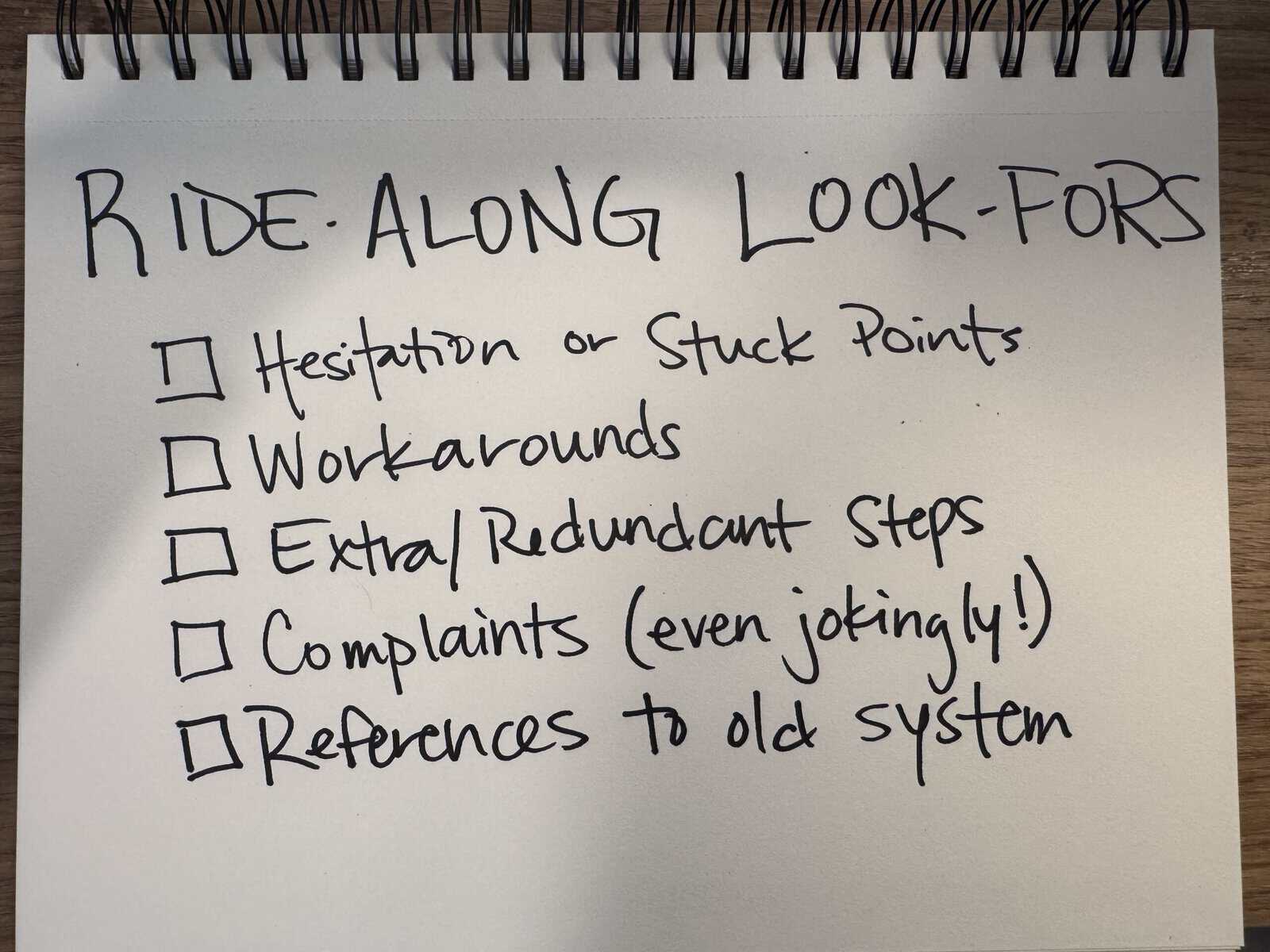
- Sitting side by side with stakeholders at every level as they implemented the new process. Over and over again, she shared examples where she sat side by side with the people making the change. She talked about the “ride-alongs” she did at the registration center where she realized her staff was still printing copies of enrollment forms and sending them to schools because nobody had told them they could stop. She talked about changing a name field to a dropdown in the new digital system within two days because she heard someone mention it in passing. She talked about how she really listened when what was supposed to be a party to recycle old forms turned into a venting session.
Mara’s Change Management Process
If you’re a “Just give me the templates so I can get started” kind of person (aka our COO, Libby), we put together a Change Management Toolkit.
If you’re a “Tell me the thinking behind each step” kind of person (aka our Founder, Jess), read on for the good stuff! Here’s what this article will cover:
- Step 1: Name reality upfront — including the fears
- Step 2: Sit alongside people — literally
- Step 3: Respond fast to what’s broken — speed builds trust
- Step 4: Build peer advocates — not top-down mandates
How Mara’s Process Makes Change Stick
Step 1: Name reality upfront — including the fears
When Mara launched paperless registration, she made something clear from day one:
“This is not a pilot. This is not something we’re going to try and if it doesn’t go well, we’re going to walk back.”
Why does this matter? Because if folks have been somewhere for a long time and they’ve seen senior leaders churn, they’re used to waiting things out. “Oh, it’s another new initiative. I’m just going to keep doing what I’ve been doing and this idea will move on.”
She also named the core fear her team was feeling directly: “We are not doing this to cut jobs. That’s not what this is. We are doing this to make our recordkeeping more secure and to better understand where families are getting stuck.”
People won’t engage honestly with a change if they aren’t sure what that honesty will mean for them. You have to give them safety and clarity before you can get their real buy-in.
Step 2: Sit alongside people — literally
This is Mara’s secret weapon. She calls them “ride-alongs” — physically sitting next to someone as they do their work.
“You have to be physically next to someone — or at least on Zoom. You have to ride alongside someone or they’re not even going to think to tell you the little parts of the process that could be improved.”
Here’s what she found two months after going paperless: four or five staff members were still printing every single application from the digital system, stacking them up, and sending paper files to schools.
Nobody had told them they could stop.
“Folks will always revert back to how they did something until you tell them they can stop,” Mara told me. Her ride-alongs surfaced things people would never mention in a meeting.
Mara’s favorite question to ask while observing on a ride-along: “Is there any part of this process that has never made sense to you?”
3. Respond fast to what’s broken
The first Friday after launching paperless registration, Mara’s team held a Recycling Party to celebrate. Instead of having fun, she got an earful.
“It felt like a really rough venting session from a lot of the folks about how much they didn’t like it and they thought it wasn’t going to work.”
And here’s what she did with that: she listened for the things she could fix immediately.
Someone complained about having to type their name on every form. Three days later, it was a dropdown.
Families were struggling on Chromebooks because they were too slow. Within a week, they’d swapped them for laptops.
“You have to show folks that you’re actually making it better based on what they’re telling you on the front line.”
As a result, the tone of the feedback shifted. “It became more and more like, ‘Oh, we can actually say what’s not working! Our voices matter here and you’re actually going to change it.’”
Speed builds trust. If you’re not going to act on what you learn quickly, don’t bother asking.
If you’re not going to act on what you learn quickly, don’t bother asking.
4. Build peer advocates (not top-down mandates)
Mara didn’t try to roll everything out to everyone at once. She started with one team, learned from them, and then those folks became the advocates for the next team.
“It worked because they would be the advocates for why the paperless thing made sense. When you’ve got the old school secretary who’s referring to a paper form, her peers would be the ones like, ‘Hey, that’s not the most up-to-date — you gotta check the system.'”
The message lands differently coming from a peer who’s been through it than from central office.“It wasn’t like ‘Central tells us we’re paperless.’ It was like, ‘No no, we’re all doing this together.’”
And for folks who wanted to step up further? Mara took it a step further and secured short-term stipends for folks to lead specific initiatives during key projects and transitions. This expanded dedicated capacity to support the change, gave people growth opportunities and made folks even more bought in(!) – all without having to add new permanent (and unnecessary) positions.

Lake Michigan in winter with Delta the dog from New Orleans
Real Life Scenario
In a recent HeliaConnects session, a leader surfaced an issue that’s a perfect candidate for using a Side by Side to get to a resolution:
The organization had recently changed the caseloads for their frontline staff — and after a few months, the metrics looked good. Utilization was up and their impact indicators were strong. By the numbers, the change was working.
AND their staff said they were drowning — they felt like they didn’t have time to breathe, even though the data didn’t show them working more hours.
What the HeliaConnects group surfaced: the numbers were only telling half the story. Without real qualitative data — without sitting side by side to see where things were breaking down — leadership couldn’t see what was really happening and couldn’t decide how to respond.
- Were folks just struggling with the change and the best course of action was more time?
- Were there one or two driving the discontent that needed to be addressed directly?
- Were there system and structural issues that needed attention?
Mara agrees. The fix is almost never to walk back the change. The fix is to sit alongside the managers and the frontline staff to understand what the spreadsheet isn’t showing — and then work together to iterate the process into something that works for everyone in the room.
When to do this Yourself vs Bring Someone in
Everything I’ve shared here? You can do it. If you have time to embed with your team, a team that will give you honest feedback, and the authority to make quick changes, this approach will work.
You might want outside help if:
- You’re leading the transition AND running your regular job — and you don’t have the cover to embed for weeks
- Trust is already damaged — people have been burned by past changes and an outside perspective might land differently
- You’re not sure what you’re looking for — you know something’s not working but can’t diagnose it
- The politics are complicated — the changes affect multiple teams or departments and you need someone who isn’t in the middle of it
If you want help making your change actually stick
Mara Harwel consults on transitions, change management, and capacity building — especially helping teams navigate change without burning out. Her approach: sit alongside people, respond fast to what’s broken, and build together instead of announcing from above.
She’s a good fit if:
- You’re about to roll out something significant and want to get it right the first time
- A change has been announced but isn’t actually happening — and you can’t figure out why
- There’s a gap between what your metrics show and what your people experience
- You’ve tried rolling out changes before and they haven’t stuck
- You want to learn the approach yourself, not just hire it out
What working with her can look like:
- Embedded support — Mara can do the ride-alongs and rapid iteration with you, or train your team to do it
- Transition design — Plan a rollout that’s built for learning, not just announcing
- Coaching — Help you develop the skills internally so you’re not dependent on outside help next time
Connect with Mara!
Try it Yourself
- Side-by-Side Observation Guide — How to do ride-alongs that surface the hidden habits and workarounds nobody mentions in meetings
- Change Communication Scripts — Language for announcements, venting sessions, “you can stop now,” and equipping peer advocates
Recommended reading:
- Hack Your Bureaucracy by Marina Nitze and Nick Sinai — one of my FAVORITE resources for making change happen in what we often think of as resistant systems, but actually are just ones we need to better understand. And spend some time sitting with folks in!
Questions to Sit With
- When’s the last time I sat alongside someone doing frontline work — not to check on them, but to learn what’s actually happening?
- What are people still doing that they could stop — but nobody’s told them explicitly?
- If I announced a change tomorrow, would my team believe it’s actually happening? Or would they assume they can wait it out?
- What’s the fastest I’ve ever responded to feedback? What would it take to move that fast on this transition?
- Is there a gap between what my metrics show and what my people experience?
Not sure Mara‘s the right fit? Talk to Helia directly!
This article comes from a coffee chat with Mara in October 2025 — and from years of watching change initiatives fail because they started with announcements instead of curiosity.

About Mara
Mara Harwel started as a teacher through Teach for America in New Orleans and spent over a decade on the strategy and operations side at Relay Graduate School of Education, helping scale from a 35-person startup to 17 campuses plus national programs. She then spent four years at Providence Public Schools leading major transitions — including taking registration from fully paper-based to fully digital with the same team and systems.
What I loved most about our conversation: her insistence that change doesn’t happen through slide decks — it happens through sitting alongside people, responding fast, and building together.