
Long Story Short
When an Oakland nonprofit supporting victims of sex-trafficking lost its federal grants, it didn’t find a new donor to cover the gap. It found a county willing to pay for the work it was already doing. This is the story of how that happened, what’s still hard (like needing money to start making money), and how a housing organization in Omaha got to a similar place in a different way.
Why We’re Sharing This
Libby here.
Pretty much everyone we talk to right now says the same thing: philanthropy is drying up, and government funding is shaky at best. We’ve been looking for examples of nonprofits that found other ways to pay for their work so that, if your org is facing similar challenges, you can ask yourself what your version of this might look like.
A few weeks ago I was at the park with a friend who is the board member of a nonprofit that just had its operating grant cut. He also happens to work at a large foundation and is in the room when money decisions get made. He shared that philanthropy goes in waves: in the 70s, everyone got operating grants. A few decades later, funders stopped wanting to pay salaries. Then everyone agreed again that people need to get paid. And now we’re back to cutting operating grants.
He also said not everything can be an earned income model, and that philanthropy has a real place.
I’m still thinking about that. I think he’s right that philanthropy has a purpose. I also think necessity is the mother of invention. If the money isn’t there, organizations still have to find a way to keep showing up for the people they serve.
That’s how I ended up talking with Shannon Scott. Shannon runs Our Lived Experience, and she’s spent years helping organizations led by people with lived experience build their own sustainability. When I told her what we were looking for, she introduced me to two leaders she works with, because she wanted the people doing the work to tell their stories.
The first was Dr. Denecia “Neesh” Carlay, co-founder of Village Is Possible in Oakland. Neesh grew up in the Oakland foster care system, around the same kind of exploitation her organization now works to heal. She became a child welfare social worker in 2007 to change the system from the inside, and found that half the kids on her caseload were being trafficked and almost no one was doing anything about it. Back then, most of them ended up in juvenile hall.
She spent a decade being told her own lived experience was a liability – that having been close to the problem made her less qualified to help, not more. It took her ten years to find her voice around that and, when she finally did, she built an organization on the exact opposite belief: that the people closest to the problem should be the ones leading the solution. Village Is Possible, which she co-founded in 2021 with her sister Reese Cormier and a group of survivor leaders, runs on a survivor-first model. Nothing built for young people without young people.
When Neesh talks about earned income, she is not talking about it the way a consultant talks about revenue diversification. She’s talking about survival. Specifically, the survival of an organization built by and for people the funding system was never really designed to protect.
Neesh’s Story
This is Neesh’s story: co-written with Helia and told from her perspective!
How we got here
For about two years, we had good funding. Then the new administration came in at the start of 2025 and funding for programs serving women, LGBTQ folks, and young people of color started getting pulled almost right away. The young people we work with, the ones most impacted by trafficking, are exactly who that hit. We weren’t willing to change who we serve to stay eligible, so we lost the federal grants.
It really hit us in February 2025. For the next seven or eight months we tried everything we could think of. We went after individual donors. We put five or ten thousand dollars into fundraisers we ran ourselves. We made healing journals and sold them. Very little of the money we invested in fundraising came back. By December we had let go of 80% of our staff, and I was paying myself a couple hundred dollars a month while working another full-time job.
As painful as that was, it’s important to share because these stories usually get told after the fact and they end up sounding like somebody had a plan. We didn’t. We were desperate, and we needed money to keep showing up for kids who really need us.
Getting paid for what we already do
Our work has three parts. The first is healing for each young person, and we go a lot further than talk therapy. Trafficking does real damage to young people’s bodies and to their sense of who they are, so we connect them with somatic and body-based support, including chiropractors and pelvic floor restoration therapists.
The second is peer support. Young people who have been through their own healing can become what we call Sage survivor leaders. We take them through a healing centered engagement certification and teach them trafficking 101 and 102, so they have words for what happened to them, like grooming and coercion. Then they sit across from a young person who is still in it and support them. We also run Village Vibes every other week: concerts, basketball games, picnics, hikes in the Oakland hills. It looks like a party, but it’s also how kids start to feel safe enough to open up.
The third is the family. We’re trained in Family Centered Treatment, an evidence-based model, and we use it with biological families when that’s safe, and with chosen family and foster parents when it isn’t. Other people in the system sometimes say these young people “blow out” of placements. We go into the home and look at what’s actually happening there.
So who pays for all of this work now that fundraising and federal grants have dried up?
Right now, the counties. San Francisco County pays us directly, out of county funds, for peer support and Family Centered Treatment, and we have contracts with Alameda County too.
But that only happened because San Francisco went to bat for us. We were serving a lot of their young people and we’d been telling them all year that we were trying everything and that we’d probably have to stop working with most of our clients because we were running out of funding. They were upset. They told us they wanted to keep working with us because the work was having real impact.
California has a state funding stream for complex care, and San Francisco spent three months applying for it so the money could come to us. That meant a lot to me. It also didn’t work. That funding is so complicated that only about 5% of applicants get through. Still, they valued our work so much that the county gave us about three months of its own funds to keep working with a couple of youth, which got us to around April. After that, our staff volunteered for two or three more months because they’re that committed to these kids. When we finally told the county we were tapped out, they came back and said they could do six more months of county funds. They sat down with their own fiscal people to figure out what they could do. That’s how we ended up with a fee-for-service contract.
None of this works if the county doesn’t value what we do enough to go looking for the money. I’m really grateful for that.
Learning how the money moves
The thing I had to learn is that counties can’t pay for everything the same way. It depends on how the work is classified.
Family Centered Treatment is evidence-based, so a lot of human services departments can pay for it out of several different budget lines. That gives counties room to be creative.
Peer support doesn’t fit as neatly. A county only has a few pots of money it can use for it, and the main one is called “complex care,” the same funding San Francisco couldn’t get for us. There’s around $5 million in child welfare complex care money that’s been really hard to access, and if it isn’t used by the end of this year, it gets moved to other departments.
I could talk all day about the red tape. The federal government changed its rules, and the counties want to help us, but the state money they’d use is too hard to get. Peer support and family treatment are equally important to our young people, but one is much easier for a county to pay for than the other.
Where we are now
People talk all day about earned income but they don’t talk about how it takes money to get started, and when you’re already broke, you don’t have it.
You see it even with the funding we do win. Grants and contracts pay you after you’ve done the work. We had one from the Department on the Status of Women, about $800,000 a year for two years, and they paid us three, sometimes four months after we’d done the work. We have fiscal sponsors who were willing to front the money and wait to get paid back, and I’m grateful for that, but it only works for so long. At this point we’d need about a $50,000 cushion just to be able to accept a grant like that.
The next earned income offering we want to build has the same problem. To make peer support sustainable, we want to bill Medi-Cal through California’s peer support billing program. That means paying a billing partner (we found a company in Fresno that could take our contact notes securely and submit the billing), paying to get our peer supporters certified, and paying for clinical oversight. All in, it’s probably around $50,000. Once it’s set up, the billing would pay for itself. We just can’t get there on our own.
Shannon has a great way of putting this. Funders always ask, “What’s your sustainability plan?” She thinks the better question is, “What investment do you need to become sustainable?”
Why contracts feel different
Shannon still catches me calling our funding “grants.” The Department on the Status of Women money wasn’t really a grant. It was: you provide these services, and we’ll pay you for them. She’ll tell me, “Neesh, you got a government contract.”
She also put words to a major mindset shift: We don’t want free money.
With a contract, the rules are clear. You commit to these deliverables, on this timeline, with this reporting. There’s none of the unspoken stuff, like taking a funder to dinner or getting them a speaking slot at your event. Shannon says that gives an organization a lot more ownership, and I feel that.
It comes with its own work. We had to build real skills and systems to collect data and report on our outcomes the way government contracts require, and that’s why we have so much data now. Contracts usually only run a year or two before they go out to competitive bid, so you have to be ready for that. And some doors need even more. San Francisco has asked us to have our peer supporters become standing members of its collaborative courts, which give young people like ours more individualized support. They want us to have Medi-Cal billing set up first. So we’re back to that $50,000.
We’re not done. Shannon has applied to a dozen grants this year. I bring our journals everywhere I go as a state director, even if I only sell five. But I know what we need next and roughly what it costs.
A Different Path to the Same Place
Libby again.
Shannon also shared the work of Aaron Weaver at Reimagine Omaha, a housing advocacy organization in Nebraska. They do a lot of hands-on housing work, like roommate matching and landlord incentives. They also had a peer support team training nurses and social workers on how to work with people experiencing homelessness, and they were doing those trainings for free.
Shannon looked at their trainings and saw something people would pay for. (One of their trainings is on storytelling. She told them they could sell that to a bank!) So they started offering trainings to entities that could pay for them, and they found a niche in healthcare. They partnered with Creighton University to turn a training into a course that earns healthcare providers continuing education units. It’s called Intro to Homelessness. The first group of nurses and doctors took it earlier this year, and they’re now on their second or third round. The plan is to get the whole library of trainings approved.
Getting a course approved for CEUs is slow. Universities don’t have much reason to hurry, so philanthropy is what kept Reimagine Omaha going while they waited. Shannon, Neesh, and Aaron are clear-eyed about the very real startup costs that go with earned income. You need money to get something started so the work can eventually pay for itself.
What Made This Work
Neither organization followed a playbook. But a few things show up in both stories:
- They charged for work they were already doing. Village Is Possible was already doing peer support and family treatment. Reimagine Omaha already had the trainings. Neither one built a new program to sell.
- Someone on the other side valued the work. San Francisco County spent three months chasing state money for Village Is Possible, then found its own funds twice. The contract exists because the county wanted to keep them. Relationships with stakeholders MATTER, so invest in them.
- They learned what makes work payable. Family Centered Treatment is evidence-based, so counties can fund it lots of ways. Reimagine Omaha’s CEU credits are why nurses and doctors will pay for a course. How the work is classified decides a lot.
- They’re honest about the startup cost. Village Is Possible needs about $50,000 to start billing Medi-Cal and to handle payments that come months late. Reimagine Omaha needed philanthropy to get through the CEU approval process. Getting to earned income costs money.
- They started where they could. Village Is Possible still can’t bill Medi-Cal for peer support. Reimagine Omaha has one course approved, not the whole library. Both started with what they could charge for and kept going from there.
- It came out of a hard year. None of this started as a strategy. For Village Is Possible, it started with lost grants, layoffs, and a founder paying herself a couple hundred dollars a month.
If You Want Help
Shannon Scott has spent her career at the place where mission-driven work meets the money that pays for it. She ran the training hub at StriveTogether, worked with state and county child welfare systems at Foster America, and now leads Our Lived Experience, which supports organizations led by people with lived experience. She’s helped both Village Is Possible and Reimagine Omaha find ways to get paid for their expertise, and she’s the one who keeps reminding Neesh that she has government contracts, not grants.
Her work includes fractional leadership, grant strategy, contract review, and building the systems organizations need to own their own sustainability.
She’s a good fit if:
- Your funding is drying up and you want to find revenue you have more control over
- You suspect a county, state agency, or university might pay for something you already do, but you don’t know where to start
- You want to turn trainings or expertise into something people pay for
- You’re leading an organization built on lived experience and want a partner who shares that value
Connect with Shannon!
Want to support Village Is Possible directly? Donate HERE.
Questions to Sit With
- What do you already do that a county, state agency, university, or other organization might be willing to pay for?
- Who on the other side values your work enough to go looking for the money? Do they know how close you are to stopping?
- How is your work classified, and does that make it easy or hard for someone to pay for it?
- What would it cost to get started, and could you name that number to a funder?
- If a funder asked, “What investment do you need to become sustainable?” what would you tell them?
Not sure Shannon‘s the right fit? Talk to Helia directly!
This story comes from a coffee chat with Dr. Neesh and Shannon Scott in August 2026. These conversations form the heart of the Helia Library — because we’ve learned the most from doing and from talking with other doers willing to share their wisdom. We don’t need to start from blank pages or do everything alone.
As always, take what’s helpful, leave what’s not, and make it your own.
About the Contributors
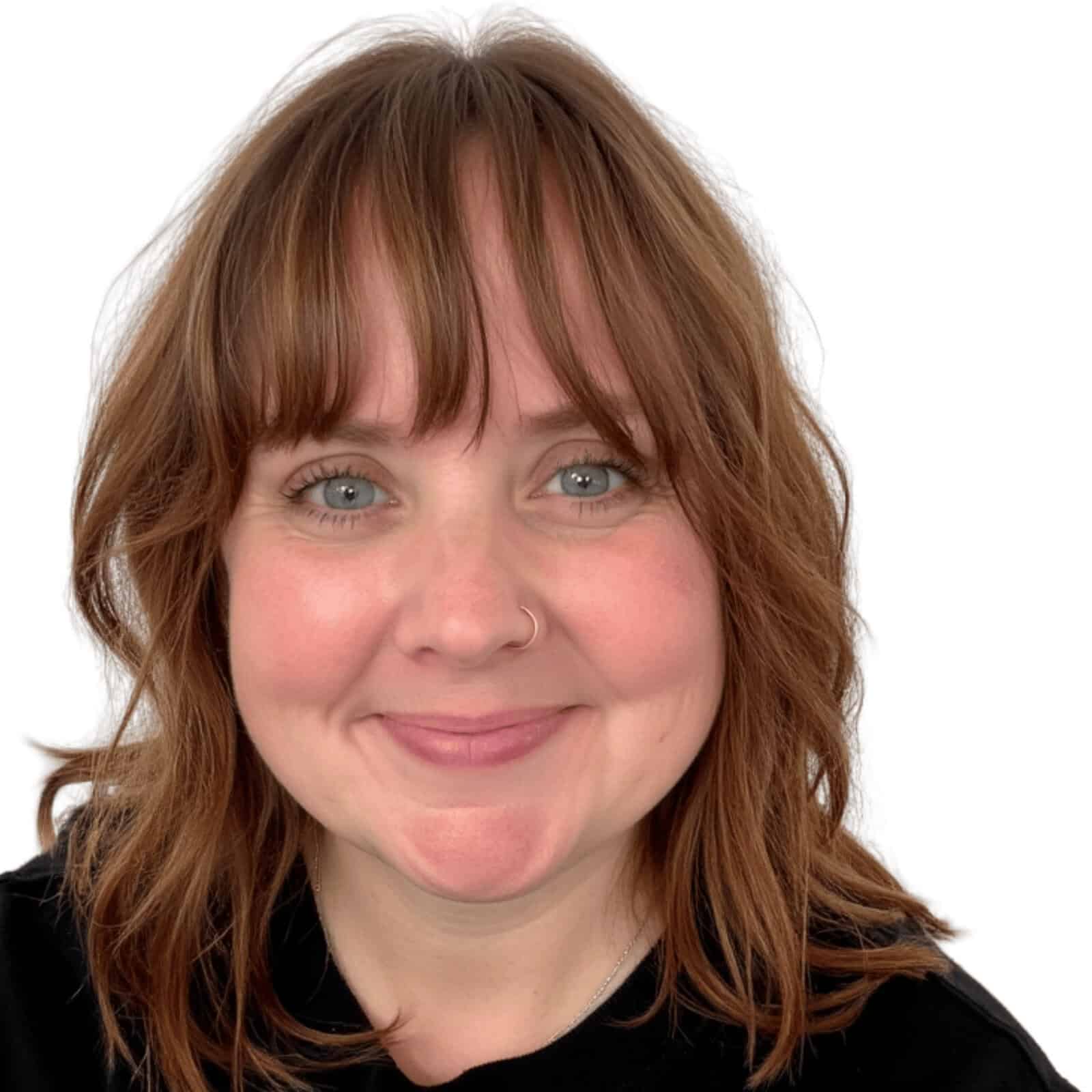
Shannon Scott leads Our Lived Experience. Before that, she ran the training hub at StriveTogether and worked with state and county child welfare systems at Foster America. She first met Neesh in 2020, when she oversaw the fellowship Neesh was part of in Alameda County.
Dr. Neesh co-founded Villages Possible in 2021 with her sister, Reese Cormier, and a group of survivor leaders. She grew up in foster care in Oakland and spent years as a child welfare social worker before starting an organization built on the belief that people closest to the problem should lead the solutions. She also works full time as a state director, partly so Villages Possible can keep going.
Work with Shannon