Long Story Short
You don’t need a tech background to start using AI — you need one frustrating task you’re sick of doing. Diane’s favorite tools are all linked below if you want to jump straight in.
How to Jump!
Jess here!
The reason I love stories is that they move beyond the how-to’s and the step-by-step’s and, well, the neatly organized rules. They’re full of feelings and curiosity and learning and shifts. Things that help me actually understand something, not just know about it.
As AI becomes the norm (and a tool we’re VERY much using at Helia), I feel like I’m back to figuring it out alongside everyone else, and I genuinely relish getting to talk with people about how they’re using it. Not just which tools or what prompts, but how they’re thinking about it. Where it feels expansive versus limiting. The human experience of it.
I had the chance to work with Diane Martell to support Peace4Kids‘ Finding Home project, a healing-centered nature retreat for people who’ve experienced foster care. Just hearing her talk about blending AI with the real work of human connection was so beautiful and really expanded my thinking. What started as a very practical conversation about tools turned into something I kept coming back to.
The best version of this technology is the one that frees you up to be more human in your work, not less. That’s the thing Diane helped me see more clearly, and it’s why I wanted to share her story here.
Why We’re Sharing Diane’s Story
Diane is the Deputy Director of Peace4Kids in Los Angeles. She gets things done(!), leads with wisdom, and has been experimenting with AI tools long enough to have moved past the hype and into genuine, daily practice.
She didn’t come to AI from a tech background. She came to it from a really specific frustration: too many meetings spent on wordsmithing a mission statement that never seemed to land. And that small entry point opened into something much bigger.
What makes Diane’s story worth sharing isn’t the tools she uses, but how she thinks about using them. She treats AI like a thought partner, not a shortcut. She asks it to ask her questions so she doesn’t get lazy. She builds personas so it knows who she’s speaking to. And she’s thought carefully about what it means — morally, not just practically — to put your voice into these systems.
Diane’s Story
I never set out to become an “AI person.” My journey started with a spark of curiosity and a very specific problem: our mission statement process was exhausting everyone.
We were having meeting after meeting, with everyone suggesting different versions. I’d leave thinking, “Good grief, we can’t spend hours debating ‘maybe we try this phrase’ or ‘what about this word?'” Writing fatigue is real! And we still needed to get to the point.
I literally saw an ad for Wordtune one day — it’s like Grammarly but for rewriting — and thought, “Well, that’s interesting.” The free version gave me 10 rewrites a day, and I quickly used them all up. I needed more!
Then I found Readable, which analyzes your writing and gives it a readability score. Suddenly, we had a framework. Instead of endless subjective debates, we could focus on getting a high readability score. I’d bring options to the team that already scored well, and we’d choose between those. It completely changed the process.
That small win gave me confidence to try more. I started using ChatGPT about a year ago for writing, hit the limits of the free version fast, and started paying. I dropped Wordtune because ChatGPT could do that and more. The more people I talked to who were using it, the more I learned how to get creative. Now, what don’t I use it for?
One of the sweetest moments was supporting my partner with his business. He’d often lean on me for input — reviewing his business plan, helping shape branding ideas — and over time I found myself doing a lot of the heavy lifting, which wasn’t always sustainable. Now he’s using an AI assistant to explore ideas and plan things out. He’s feeling more confident and empowered, and we’re both having fun with it. It’s brought a new kind of energy to how we collaborate.
It lets us lean into the things we really love. I spend less time on repetitive writing and more time connecting with the people we serve.
What’s Made This Work for Diane
What Diane’s figured out isn’t just which tools to use, but how to use them in a way that actually sticks. A few things that have completely changed the way she works:
She talks to it instead of types. It’s more natural for her, and it gets to the heart of what she’s actually trying to say faster.
She creates personas. She asked ChatGPT how to use it more efficiently and it suggested building distinct personas with different tones. Now she types #persona and it remembers who she is — she has one voice for the local communications committee, another for volunteers, another for professional communication, and a neutral one for case notes where she needs to document clearly without emotional tone.
She makes it ask the questions. Her favorite prompt: Can you ask me questions to help make this better? “So we don’t get lazy,” she says. It keeps her thinking instead of passively receiving.
She uses it to stay engaged when she’s depleted. When she hits compassion fatigue in a mentoring relationship, she asks AI for fresh ways to offer support while still holding accountability. It helps her stay grounded and present.
She feeds it feedback. “That’s a great answer, let’s build on it,” or “This is an important project, so please take your time and give me a thoughtful, detailed response.” She’s figured out that Chat responds to feedback, and she uses that intentionally.
One cool moment: working on a community project to make sense of years of governance documents — board notes, bylaws, historical memos. She fed it all in, and it organized everything clearly, even flagging how often they’d needlessly repeated their founding story. Community members were amazed. It created clarity where confusion had built up over years.
The Part I Keep Coming Back To
Near the end of our conversation, Diane said something that I’ve been sitting with ever since.
“We have a moral obligation. We need to feed these algorithms with our strengths, our values, our language. There aren’t enough people of color and women in AI development. This is our moment to shift the algorithm through how we use it. It’s a moral opportunity.”
It’s not about replacing ourselves. It’s about getting help with the things that drain us so we can put more of ourselves into the work that matters.
That feels right to me. AND it feels like exactly the kind of framing I want to carry into how Helia uses these tools, not as a way to produce more faster, but as a way to be more present for the humans we’re trying to serve.
If you Want to Connect
Diane isn’t a consultant, but she’s generous with her experience and perspective — especially when it comes to AI, governance, and building strong communities. If something in her story resonated and you want to talk through your own AI journey (or just swap notes on what’s working!), reach out! She’s the kind of person who actually writes back.
Connect with Diane!
Try it Yourself
Get Started
- ChatGPT — Diane’s go-to. Whether she’s drafting grant reports, rewriting a sticky email, creating a meal plan, or brainstorming names for a retreat space, she uses it as her thought partner on call 24/7.
- Helia is also a big fan of Claude, Notion, and Gamma if you want to explore!
Go Deeper:
- AI Masterclass — This helped Diane move beyond basic prompts into intentional, creative applications. She credits it with introducing her to the personas approach.
- Helia’s a fan of Rick Mulready’s freeAI Newsletter — and we’ve heard good things about his YouTube channel and the paidAI Playbook Community if you want to go deeper.
- AI and Data Bootcamps for Tech Nonprofits from Fast Forward — strengthen your technical foundation for smarter product decisions and scaled impact.
Questions to Sit With
A few things worth thinking about after reading Diane’s story…
- What repetitive tasks are stealing time from the work that actually matters to you?
- Where in your work are you stuck in endless cycles of wordsmithing or perfectionism?
- How might AI help you show up more fully for the people you serve?
- What values do you want to see reflected in the AI tools you use?
- What small, frustrating process could be your first experiment?
- How might you contribute your voice and perspective to make AI more inclusive?
Not sure Diane‘s the right fit? Talk to Helia directly!
This article comes from a coffee chat with Diane in April 2025. These conversations form the heart of the Helia Library — because we’ve learned the most from doing and from talking with other doers willing to share their wisdom. We don’t need to start from blank pages or do everything alone.
As always, take what’s helpful, leave what’s not, and make it your own.
About Diane
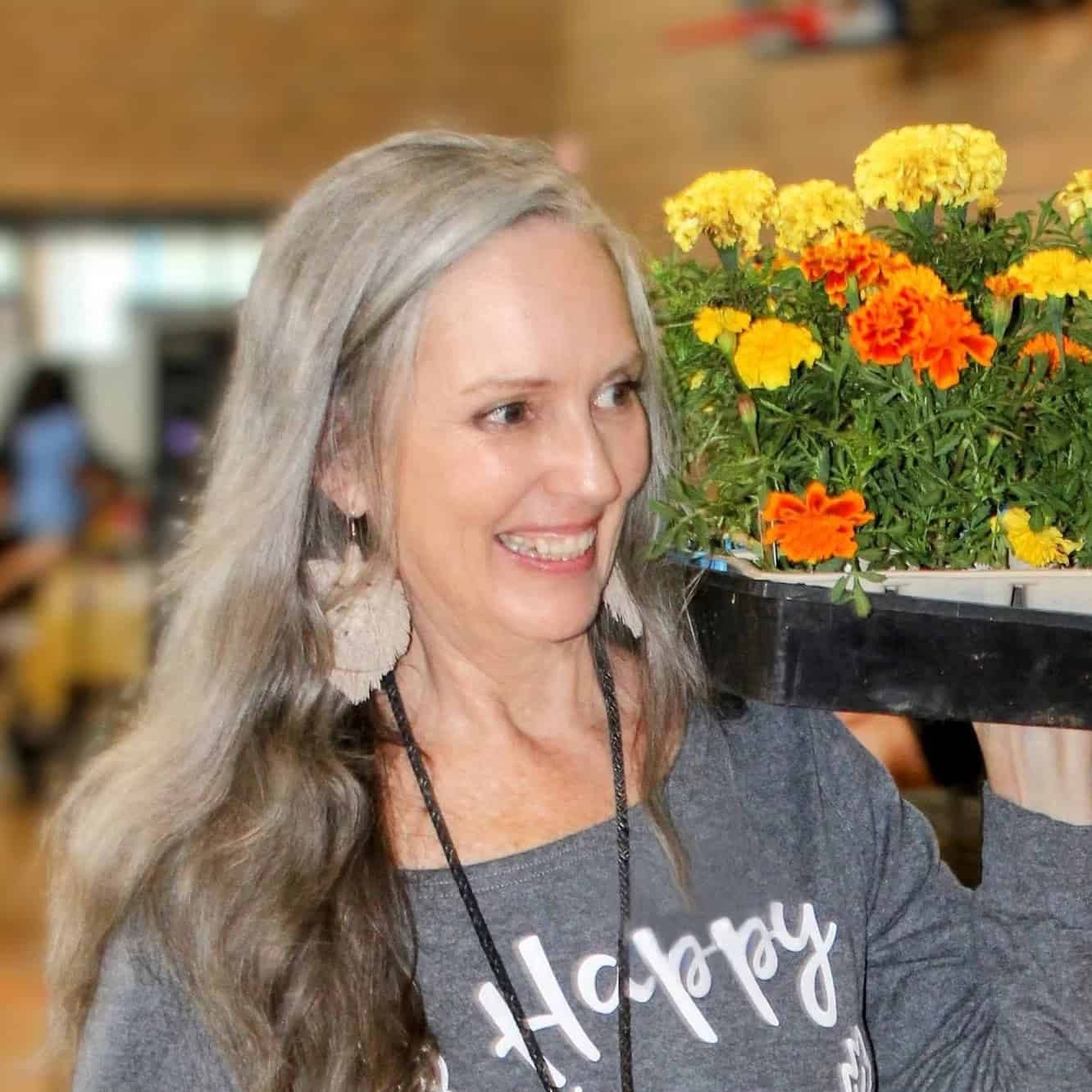
Diane Martell can build almost anything. She invented the Coffee Bean & Tea Leaf Ice Blended drink (a true story — thank her for the Frappuccino!!!), and is currently the Deputy Director of Peace4Kids in Los Angeles. She gets things done(!), leads with a beautiful combination of heart and mind, loves technology, and has built incredible personal and professional communities in both LA and the Pine Mountain Club area.
Work with Diane