Long Story Short
Tilting Futures had a sustainability plan with real benchmarks and real models — but it was built on what they hoped to raise, not what they could count on. This is the story of how they flipped that, and let “good enough” be good enough where things were already working.
Why We’re Sharing This Story
We are all living in a world where there are SO many rules, both spoken and unspoken, on how to do things. Every time I fall into the pattern of following along, whether personally or professionally, it, well, it doesn’t work.
I want to live in a world where we are grounded in the WHY of what we do and HOW intentionally we do it. One where we don’t just do it the way it’s always been done.
That’s why I loved hearing Tilting Futures tell their story. The unspoken rule a lot of orgs operate by (including ones I’ve run!) is: figure out what it costs to run your programs, then go fundraise that amount. Expenses set the number, and development is supposed to fill the gap — whatever that gap turns out to be. Tilting Futures used to do that. They built a plan. They built financial models. The numbers worked on paper.
And then they sat down to actually look at that revenue number and asked a harder question:
“Is this number real? Or is it just the number we need it to be?”
I love this question so much, AND it’s important to say that it took Tilting Futures two tries to get this right. On their first try, the plan was sound and the numbers worked. But two things were true at the same time. They were seeing the writing on the wall — federal funding shifts, real uncertainty across the philanthropic landscape — and knew they needed to get more conservative, even though nothing had hit them directly yet. AND, when they looked closer, they realized the bigger issue wasn’t only about the external world. It was a habit: development just needs to fill whatever gap is left. That’s the assumption they’d always operated on, and it meant their revenue number had never really been a forecast — it was just whatever was needed to make the plan work.
So they paused again, and flipped the question: instead of starting with what they needed, they started with what they actually thought they could bring in.
What do we actually think we can bring in this year? Not what we HOPE we can, but what do we feel confident we can?
Odiaka Gonzalez’s Story
I’ve been in the nonprofit space for 25 years, mostly in education and youth development. I’ve worn a lot of hats: programming, sales, partnerships, and even leading an organization as an Executive Director. What I’ve found, especially in the smaller orgs that are growing and building, is that operations naturally pulls me in. Finance, ops, technology, people. They’re all really connected. Right now, as VP of People + Ops at Tilting Futures, the part of my work that excites me most is bringing our values into all of those aspects. Values aren’t just for onboarding. They’re how we build culture. They’re how we make decisions.
This story is about one of those decisions.
Part 1: We knew what we wanted to be. We built a plan. The numbers worked.
A while back, we were in a senior leadership team meeting and our CEO, Erin, said, “We’ve always talked about financial sustainability, but what does that actually mean to us? How do you define that?”
And I was like, ‘Yeah, how do we define that?’ Because everybody talks about financial sustainability, but what does it mean? It shouldn’t just be a buzzword. It should be something tangible that our whole organization understands.
So we took a stab at it. We defined sustainability with specific benchmarks:
- xx% of our revenue is predictable each year
- Earned income covers xx% of direct programming costs.
Then we built financial models to see what was actually attainable. We started at 100% earned revenue covering costs, saw that wasn’t possible, and shifted to 80%. The result was a multi-year sustainability model with clear goals for each year.
For our first year, our benchmarks looked like this:
- 80% of our revenue is predictable each year
- Earned income covers 80% of direct programming costs.
From there, we worked backward to what our expense and income targets needed to be for the year to hit those benchmarks. Then we set those targets and asked our teams to build their budgets to them.
Part 2: We got close. And that’s exactly when the number stopped feeling right.
We started doing the work. We were making real progress toward those targets. For the FY25 budget, our first draft came in within $100K of the number we wanted — the closest we’d been in six years.
That felt like a real win, for about a minute. Then Erin flagged something: the revenue side of that number felt off to her. Not because of anything we’d done wrong — it was that with everything going on in the world, that number suddenly didn’t feel like one we could count on anymore.
That’s the part that doesn’t show up on a spreadsheet. Getting close to a number you’re not sure is real doesn’t actually feel like winning. It just feels like a more convincing version of the same hustle.
We knew we didn’t want to keep operating like this.
Part 3: Starting from what we have.
For our next budgeting go round, we got specific about what “starting from what we have” actually meant. We stopped asking, “This is what it takes to run our program, so we need to raise this much,” and started asking: “What do we actually think we can bring in this year? Not what we HOPE we can, but what we feel confident we can.”
I worked with our Chief External Affairs Officer, Aziza, to build out high, medium, and low revenue scenarios that were broken down by funders, with her confidence in each. As an SLT, we talked through where we should land based on the likelihood percentages.
I’ll be honest, my first instinct was to just go with the lowest case scenario. Be as conservative as possible, build the budget around the safest number. I sat down and built it out, and in doing so, I literally wrote myself out of the org chart. Erin pushed back. She said, that’s too reactive. You’re not thinking about all the data points. And she was right. Low was below what we’d historically brought in, and we have a stronger team and stronger practices now. High was higher than we’d ever raised. Every big ask had to come through, and we’d never seen that happen. Medium felt like a stretch, but one we could make. Safe enough.
Then we treated it like a household budget. This is how much we have, so this is how much we’ll save and how much we’ll spend. That meant we couldn’t just say, “Hey, we’re going to spend less.” We had to do things differently. We weren’t going to have the same marketing and communications spend. There were things we just decided we weren’t going to do anymore.
We ended up cutting our budget from $6.2M down to $5.1M — a significant decrease for us. And to do that, we had to get really honest about priorities.
We asked: what is the most important lever for our five-year strategy, and are we actually investing in it? When we looked at it, the answer was uncomfortable. The most important lever — the thing that would diversify our revenue and allow us to sustainably grow to reach our financial sustainability goals — was our earned income. That was uncomfortable because it’s the area that had the least amount of investment. We had treated our earned income work almost as a side thing.
But, if we were to sustain the org in order to deliver on our mission, we had to make a call. If this is the most important lever, we have to cut in other places and invest here. Among many changes, roles shifted so folks (myself included) could focus on earned revenue programming and move other things off their plate.
Part 4: Some things are just good enough.
This was the hardest part.
We’re an ambitious team. We work well together because we always want to do better. AND when everything is a priority, nothing really is, so we had to look honestly at where things were already strong — or simply “good enough” — and leave them alone.
Here’s what that sounded like in practice. I sat down with one of my direct reports recently and looked at her project queue. She had “evolve our onboarding process” on the list (we’d built it three years ago and we’d been talking about iterating on it.) I said no. Our onboarding is good. New hires tell their friends it’s better than anything they’ve experienced. We’re going to leave it as is and rinse and repeat. The wiring on ambitious teams is to keep improving everything because stagnation feels bad, but not everything that’s stagnant is broken. Some things are stagnant because they ARE working.
Here’s how we ended up framing it: our program is already strong. Our M&E is already strong. Our onboarding is already strong. Could they be even better? Sure… but they are good enough for us right now so we’re going to leave them there. Earned income programming? Not as strong. If that’s the lever we have to push to become sustainable, then that’s where the people, the money, the energy, and the time need to go.
When you’re wired to keep getting better at everything, learning what to leave alone is its own discipline. It feels unnatural at first, but it’s the thing that makes the rest of it possible.
Part 5: What it gave us back.
The whole experience changed how the work feels.
For our development team, the wins are starting to feel like actual wins. We just got a major multi-year gift. We’re already at 60% of our multi-year funding goal, and we’re in Q1. The goal is still ambitious and now it feels in reach. That’s different. It feels good.
For our SLT, we get to operate from “we have enough.” Not abundance, not scarcity, but enough to do what our priorities are this year. That changes everything about how you lead. We can make decisions in the moment, because we are grounded in our reasoning. No more constantly chasing something better.
We get to say no to things. Not because the opportunities are bad, but because they’re not what gets us to our earned revenue goals right now. We were recently approached about a genuinely great opportunity. But when we ran it through our new lens — does this actually move us toward our earned revenue goals — the answer was no. So, we said no. That kind of clarity, about where our time and energy actually needs to go, wasn’t possible before.
A note on outside help.
We didn’t do this alone. We work with Ben Cain, who supports us on our financial model and the multi-year sustainability planning. His input shaped a lot of what we built.
What was important — and I think this is the piece that matters most — is that we used his expertise AND we stayed the ones making the decisions. He built the model, but we are the ones responsible for carrying out the work the model is built on, so we are the ones making the decisions. The hard “this is good enough, this is what matters most, and this is what we’re not going to do anymore” calls? Those are ours. Outside help is a resource. The decision-making is yours.
What Stuck With Me
Some of my favorites:
- “Good enough” is SO hard. We’re trained to optimize. From funders, Boards and teams, to everything is about what’s next, where are we growing, and what are we improving… Almost nothing in our world rewards leaving a working thing alone. So when Tilting Futures looked at onboarding and said we’re not touching it? That’s not just smart and exactly right. It’s permission most of us don’t give ourselves (because who is doing that?!?!?).
- The foundation for this work was built LONG before. From building a strong leadership team that could have hard conversations (and put the organization and their shared work ahead of themselves) to dedicating time with the team in and on financial awareness.
- “We have enough.” We all talk about abundance and scarcity, but I love the idea of “enough”. It’s something we can all be in different and deeper relationships with. What is enough — to do, to create, to earn — and how can we ground in that? More isn’t always better!
- Outside help is a resource. The deciding should ALWAYS be yours. It is so easy to go it alone, or when that’s too daunting(!), to hand it off. There’s no glory in doing it all yourself (and there is no framework or consultant with the silver bullet or right answer.) Tilting Futures did this so beautifully. They leveraged the expertise of Ben Cain at Do Good CFO in order to feel confident in their decision-making. They didn’t outsource their decisions.
If You Want Help
This kind of work doesn’t require an outside partner, but there are moments where having one — for the financial modeling, for the conversations, for someone who’s done it before to be a thought partner — makes it actually possible.
You might want help if:
- You’ve got a long-term sustainability vision but no path from here to there
- Your budget process feels like a math problem you keep losing
- You know you need to prioritize differently and can’t quite figure out where to cut
- You want a thought partner for the SLT conversations themselves
Connect with Odiaka!
Questions to Sit With
- What’s already strong that I could leave alone, so I can put my energy where it actually needs to go?
- How do we close the gap from “where am I starting from” to hoping fundraising will take care of the rest?
- If our wins started feeling like wins, what else would change?
Not sure Odiaka‘s the right fit? Talk to Helia directly!
This story comes from a coffee chat with Odiaka in August 2025. These conversations form the heart of the Helia Library — because we’ve learned the most from doing and from talking with other doers willing to share their wisdom. We don’t need to start from blank pages or do everything alone.
As always, take what’s helpful, leave what’s not, and make it your own.
About Odiaka
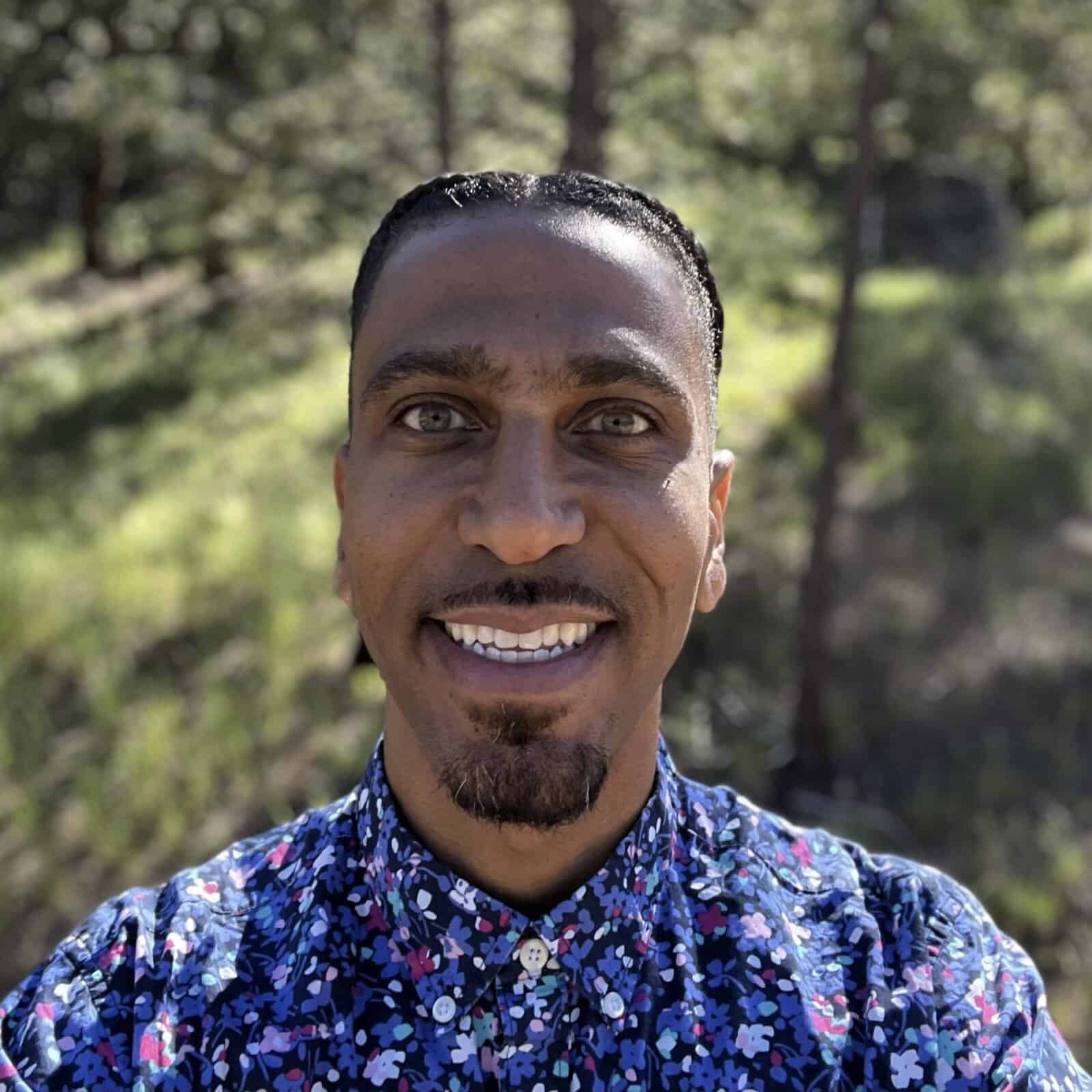
Odiaka Gonzalez took his mom’s advice to join the Jesuit Volunteer Corps after college because he had no clue what he wanted to do. That choice has shaped 25 years of nonprofit leadership. He’s now VP of People + Ops at Tilting Futures, and has been at Playworks, Revolution Foods, and led Oakland Leaf as Executive Director for five years along the way. He’s a DJ, a dad, and has called Oakland home longer than anywhere else.
What I loved about our conversation: his insistence that values aren’t just for onboarding. They’re how you budget.